 |
|||||||||||||||||
|
|||||||||||||||||
| Published on May 29, 2026 | |||||||||||||||||
|
Lithium Ionic is committed to the acquisition, exploration, and development of lithium properties in Brazil, aiming to create sustainable long-term value for its shareholders through the discovery and potential extraction of lithium—a critical mineral that drives the green revolution. The Company, along with its wholly-owned subsidiaries MGLIT Empreendimentos Ltda., Neolit Minerals Participações Ltda., Salit Mineração Ltda, is focused on advancing its flagship projects, Itinga and Salinas, located in the lithium-rich Minas Gerais state. Together, these properties encompass 11,684- hectares within this mining-friendly province. Minas Gerais state is distinguished by its robust infrastructure, featuring access to highways, a hydroelectric power grid, water resources, and nearby commercial ports, which facilitate efficient operations. Lithium Ionic began trading on the TSX Venture Exchange in May 2022 under the ticker symbol LTH. The Company is also listed on the OTCQX in the United States as LTHCF and in Germany under the symbol H3N. |
|||||||||||||||||
| Disclaimer and Forward Looking Statements | |||||||||||||||||
| Company Profile | |||||||||||||||||
| Organizational Profile | |||||||||||||||||
| Name | Lithium Ionic Corp. | ||||||||||||||||
| Describe nature of activities, brands, products and services | Lithium Ionic is a Canadian junior mining company exploring and developing lithium projects in Brazil. The Company and its wholly-owned subsidiaries MGLIT Empreendimentos Ltda., Neolit Minerals Participações Ltda., Salit Mineração Ltda are currently focused on advancing its flagship | ||||||||||||||||
|
Itinga Project, encompassing the Bandeira and Outro Lado sites, as well as the Salinas project, situated approximately 100 km north of the Itinga site. The region is known for its lithium reserves, which drive Lithium Ionic’s goal of generating value for its shareholders through the discovery and potential future extraction of lithium. Driving Lithium Ionic’s success are the following principles: safety, integrity, responsibility, accountability, and excellence. Lithium Ionic has the potential to create long-term positive impacts by supporting local communities and contributing to the global transition to net-zero emissions through the production and distribution of commercial-grade lithium. |
|||||||||||||||||
| Link to Corporate Website | https://www.lithiumionic.com/ | ||||||||||||||||
| Industry Classification |
NAICS: 21 Mining, quarrying, and oil and gas extraction 212299 All other metal ore mining ISIC: B0729 Mining of other non-ferrous metal ores |
||||||||||||||||
| Type of Operations | Lithium exploration and development | ||||||||||||||||
| Company Headquarters | Toronto, Canada | ||||||||||||||||
| ESG Accountability | |||||||||||||||||
| Role of highest authority within the company for Environment, Social and Governance strategy, programs and performance | |||||||||||||||||
| The name of the highest authority, if applicable | Flavia Veronese, ESG Director | ||||||||||||||||
| ESG Reporting Period | |||||||||||||||||
| Unless otherwise noted, all data contained in this report covers the following period | |||||||||||||||||
| From | 2025-01-01 | ||||||||||||||||
| To | 2025-12-31 | ||||||||||||||||
| External Assurance | |||||||||||||||||
| Describe your company's policy and practice for seeking external assurance, including whether and how the highest governance body and senior executives are involved | The information provided is self declared. | ||||||||||||||||
| Are the highest governance body and senior executives involved | Yes | ||||||||||||||||
| Describe how the highest governance body and senior executives are involved | Senior management is involved in the review and approval process of all ESG data that is published within this report. | ||||||||||||||||
| Has the report been externally assured | No | ||||||||||||||||
| Financial Reporting Period | |||||||||||||||||
| Does the financial reporting period align with the sustainability reporting period (e.g. calendar vs fiscal) | Yes | ||||||||||||||||
| Geographic Scope of Report | |||||||||||||||||
| Unless otherwise noted, the data in this report covers sustainability matters related to the following locations of operations | Brazil | ||||||||||||||||
| Identify notable exclusions of the geographical and/or business scope of the report, and reference of any existing or planned reports that do or will address these (e.g., assets recently divested or acquired, non-managed joint ventures, specific exploration activities, recently closed sites, etc.) | None | ||||||||||||||||
| Reporting Practice | |||||||||||||||||
| Provide a list of all legal entities included in its sustainability reporting |
Lithium Ionic Corp. MGLIT Empreendimentos Ltda., Neolit Minerals Participações Ltda., Salit Mineração Ltda |
||||||||||||||||
| Does the organization have audited consolidated financial statements or financial information filed on public record | Yes | ||||||||||||||||
| If the organization has audited consolidated financial statements or financial information filed on public record, specify the differences between the list of entities included in its financial reporting and the list included in its sustainability reporting | At the audited financial level, all reporting covers Lithium Ionic Corp, while sustainability reporting covers Lithium Ionic, along with its subsidiaries. | ||||||||||||||||
| Does the organization consist of multiple entities | Yes | ||||||||||||||||
| If the organization consists of multiple entities, explain the approach used for consolidating the information | The annual sustainability reporting is done by Lithium Ionic at the corporate level, and uses the information provided by our subsidiaries on-site in Minas Gerais, Brazil. The reports consolidate all actions taken at the on-site level, as well as any ESG-related programming at the corporate level. For the purposes of our ESG Reporting, the term "Lithium Ionic Group" is used to encompass both corporate and on-site efforts. | ||||||||||||||||
| Does the approach used for consolidating the information differ across the disclosures in this Standard (GRI 2) and across material topics | No | ||||||||||||||||
| Is the data and assumptions used in preparing the sustainability-related financial disclosures consistent (to the extent possible considering the requirements of IFRS Accounting Standards or other applicable GAAP) with the corresponding data and assumptions used in preparing the related financial statements. | No | ||||||||||||||||
| Report what are the restatements and the reasons for restatements, if any, from previous reporting periods | No restatement | ||||||||||||||||
| Provide the full contact details (name, title, address, email and/or phone number) for an individual responsible to address questions regarding the report or its contents |
Katrina Diez Manager, Environment and Sustainable Governance 36 Lombard Street, Floor 4 Toronto, ON, Canada, M5C 2X3 kdiez@lithiumionic.com |
||||||||||||||||
| Currency | |||||||||||||||||
| Unless otherwise noted, all financial figures referenced in this report are in the following currency | CAD | ||||||||||||||||
| Membership of Associations | |||||||||||||||||
| List of the industry associations, other membership associations, and national or international advocacy organizations in which the organisation participates in a significant role, as well as any economic, environmental, and social charters, principles, or other programmes that the organisation subscribes to or supports, such as the United Nations Global Compact (UNGC), etc. |
Lithium Ionic has taken several steps to align its operations with recognized industry best practices and international sustainability frameworks. The Company initiated an IRMA Mine Measure self-assessment for its Bandeira Project and subsequently joined the IRMA Mine Group for Self-Assessing Mines, enabling collaboration with industry peers undertaking similar IRMA alignment efforts. The Company’s objective is for the Bandeira Project to undergo an IRMA audit once it reaches the production stage. Lithium Ionic is also a signatory to the United Nations Global Compact, reinforcing its commitment to internationally recognized principles related to human rights, labour, environment, and anti-corruption. Participation in UN-led programs has supported internal capacity building, including strengthening expertise related to climate strategy development and target-setting. In addition, Lithium Ionic is a member of the International Lithium Association and Women in Mining Brazil, reflecting the Company’s commitment to responsible lithium development and to promoting diversity and inclusion within the mining sector. Furthermore, the Company’s subsidiary, MGLIT Empreendimentos Ltda., participates in the Vale do Lítio Subgroup, an initiative led by the Military Police of Minas Gerais that brings together mining and engineering companies in the Araçuaí and Itinga regions to collaboratively address community needs related to public safety and local infrastructure. |
||||||||||||||||
| Scale of the Organization | |||||||||||||||||
| Nature of corporate ownership | Publicly owned | ||||||||||||||||
| Legal form of corporate ownership | Incorporated entity | ||||||||||||||||
| Describe how the organization defines its "Operation" and the sector(s) in which it is active |
Lithium Ionic is a near-term producer of high-quality, low-cost lithium concentrate in Brazil’s ‘Lithium Valley’, a region of global significance for hard-rock lithium production. Our claims span ~11,684 hectares in northeastern Minas Gerais State, a mining-friendly jurisdiction where +300 mines operate. The Itinga Project includes both the Bandeira and Outro Lado sites. The Bandeira project is expecting its installation and operating licenses in 2026, with construction to commence soon after. Additionally, the Salinas site recently completed its NI 43-101 Mineral Resource Estimate (MRE) for the Baixa Grande deposit. |
||||||||||||||||
| Report the total number of operations | 1 | ||||||||||||||||
| The organization's definition used for ‘mine site’ | Lithium Ionic considers a "mine site" a claim area zone that is being explored for extractive purposes. | ||||||||||||||||
| Mine site #1: Name of the site | The Itinga Project - Bandeira site | ||||||||||||||||
| Mine site #1: Geographic location (country and coordinates) | 15 km from Araçuaí, Minas Gerais, Brazil. 16º 47' 00"S / 41º 54' 30"W | ||||||||||||||||
| Mine site #1: Size (hectares) | 156.770 | ||||||||||||||||
| Mine site #2: Name of the site | Salinas Project - Baixa Grande | ||||||||||||||||
| Mine site #2: Geographic location (country and coordinates) | 20km from Salinas, Minas Gerais, Brazil. 16º 7' 35"S / 42º 6' 50"W. | ||||||||||||||||
| Mine site #2: Size (hectares) | 1,259.560 | ||||||||||||||||
| Mine site #3: Name of the site | Itinga Project - Outro Lado | ||||||||||||||||
| Mine site #3: Geographic location (country and coordinates) | 16km from Araçuaí, Minas Gerais, Brazil. 16º 44' 40"S / 41º 56' 50"W | ||||||||||||||||
| Mine site #3: Size (hectares) | 324.230 | ||||||||||||||||
| Fragile and Conflict-Affected Situations | |||||||||||||||||
| Identify all of the entity's countries of operations that align with the World Bank's list of "Fragile and Conflict-Affected Situations" | None | ||||||||||||||||
| Mineral Resource Types in Scope | |||||||||||||||||
| Which of the following mineral resource types are covered by this report |
|
||||||||||||||||
| Mineral Reserve Types in Scope | |||||||||||||||||
| Which of the following mineral reserve types are covered by this report |
|
||||||||||||||||
| Proven and Probable Reserves are available in our updated 2025 Feasibility Study for the Bandeira Project. | |||||||||||||||||
| Strategy | |||||||||||||||||
| Corporate Purpose, Vision, Mission and Values; statements of sustainability/ESG strategy | https://www.lithiumionic.com/sustainability/overview/ | ||||||||||||||||
| Provide a statement from the highest governance body or most senior executive of the organization (i.e., CEO, chair, or equivalent senior position) about the relevance of sustainable development to the organization and its strategy for contributing to sustainable development. (CEO's message for this report) | Please see the attached statement from our CEO. | ||||||||||||||||
 |
|||||||||||||||||
| 2025 CEO Message | |||||||||||||||||
| Material Topics | |||||||||||||||||
| Governance of Material Topics | |||||||||||||||||
| Describe the process followed to determine the organization's material topics |
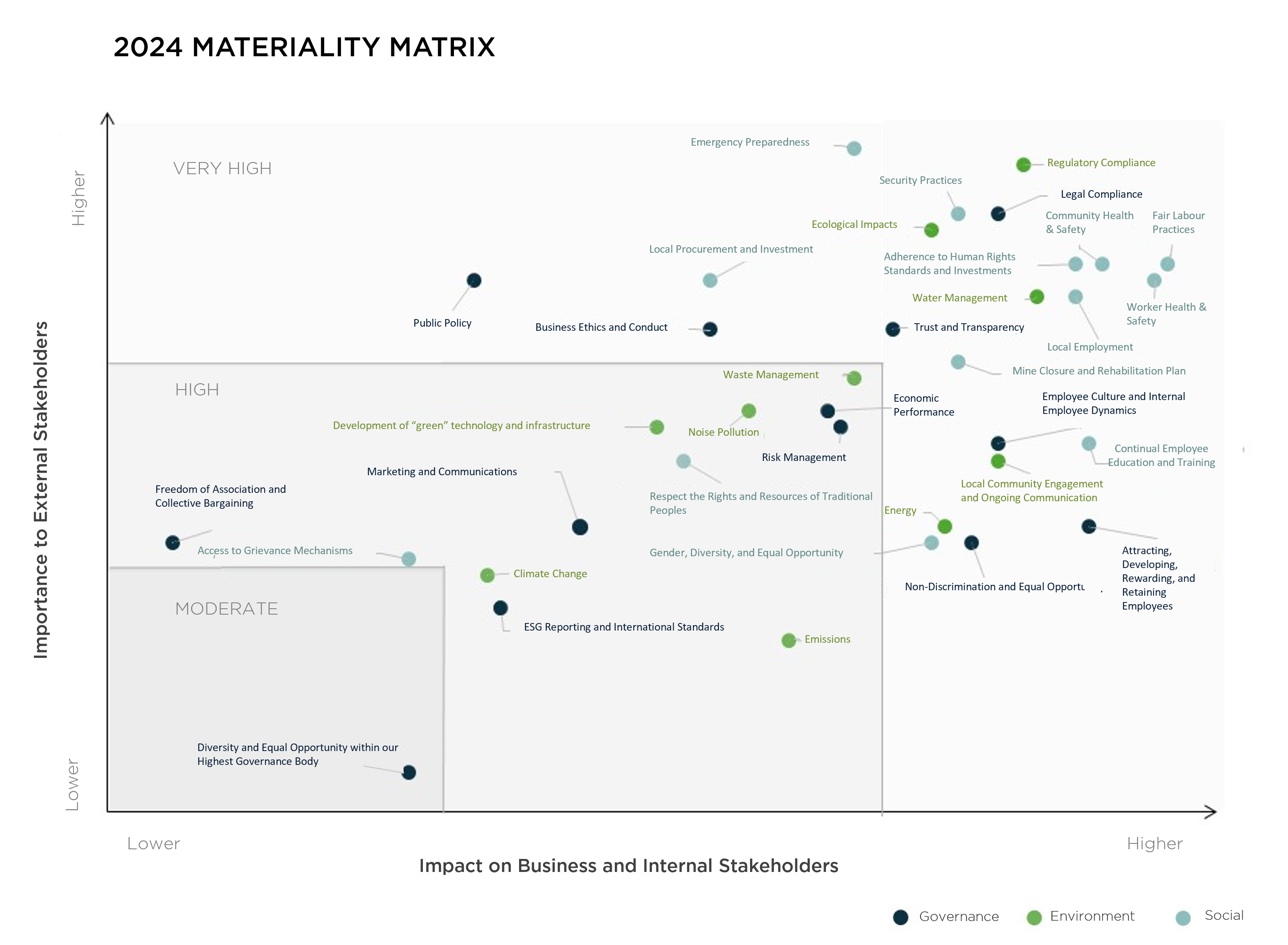
In 2024, the Company conducted an internal and external materiality assessment. Leveraging insights from the Environmental Control Report and baseline studies, we also incorporated the GRI Standards for the Mining Sector to determine the material topics to be included in our materiality questionnaire. The assessment mirrored the format of our 2023 evaluation, with material topics translated into a questionnaire where respondents ranked each topic from 1 to 10 based on its importance to them. To ensure clarity, we included a definition sheet to help respondents understand the material and provide accurate feedback. Subsequently, we sent out a questionnaire to all internal and external stakeholders and based on the findings, we discerned the topics deemed most significant by our employees and all external stakeholders. For further details, please refer to the attached materiality matrix. In addition, we have included additional material topics outlined within ONYEN that are relevant to our project. Although some of these topics were not explicitly outlined in our materiality assessment, they are in fact relevant and therefore should be acknowledged as such. We plan on conducting a materiality assessment every two years, which means our next assessment will occur in 2026. In the meantime, we have been actively holding discussions with local communities through our Social Communication Plan, and if there are any additional topics identified, we will incorporate them accordingly. |
||||||||||||||||
| How did the organization identify the material topics |
|
||||||||||||||||
 |
|||||||||||||||||
| Materiality Assessment Results | |||||||||||||||||
| How did the organization prioritize the impacts based on their significance | Based on the results of the materiality assessment, we identified the topics considered most important to our stakeholders. We ranked these topics by their significance, comparing them to the findings of our 2023 internal materiality assessment. Additionally, we reviewed our Environmental Control Report for the Bandeira site and cross-referenced the key topics highlighted in that assessment. By analyzing these material indicators, we were able to pinpoint the overarching topics that are most relevant to both our company and the project. | ||||||||||||||||
| Specify the stakeholders and experts whose views have informed the process of determining its material topics and provide details |
|
||||||||||||||||
|
List the organization's material topics |
|
||||||||||||||||
|
List the organization's non-material topics |
|
||||||||||||||||
| Provide reasons for considering such topics not material, provide details | Not applicable | ||||||||||||||||
| Lithium Ionic is currently in the exploration stage, and therefore, some of the listed material topics are either not applicable or not yet relevant to our current operations. | |||||||||||||||||
| Report changes to the list of material topics compared to the previous reporting period | There have been no changes from the 2024 reporting period, as we have not conducted a new materiality assessment in 2025. | ||||||||||||||||
| Material Topic #1: | Environmental Compliance | ||||||||||||||||
| An explanation of why the topic is material; describe the actual and potential, negative and positive impacts on the economy, environment, and people, including impacts on their human rights |
Adhering to environmental regulations is essential for minimizing ecological harm, safeguarding biodiversity, and prioritizing the health and safety of local communities. It also strengthens the long-term sustainability of mining operations by preventing legal repercussions and fostering positive stakeholder relationships. Environmental compliance is a cornerstone of sustainable lithium mining. Non-compliance can lead to environmental degradation and damage to the company's reputation. In contrast, strict adherence to regulations fosters environmental stewardship and responsible resource management, laying the foundation for the mine's sustainable growth and long- term success. |
||||||||||||||||
|
Where the impacts occur |
The impacts of environmental compliance are most directly felt at the mine site in Minas Gerais, including surrounding ecosystems and local communities. Downstream effects can also extend to areas affected by the transportation of materials and byproducts, as well as the broader supply chain, however, at this time we do not have a formal supply chain. |
||||||||||||||||
| The organization’s involvement with the impacts. e.g., whether the organization has caused or contributed to the impacts, or is directly linked to the impacts through its business relationships |
Through operational activities, there is a risk that negative environmental impacts could occur if compliance is not maintained. However, by adopting best practices, Lithium Ionic has the opportunity to mitigate these risks and highlight its commitment to operational best practices. In 2025, there were no instances of non-compliance. |
||||||||||||||||
| Report whether the organization is involved with the negative impacts through its activities or as a result of its business relationships, and describe the activities or business relationships | Both activities and business relationships | ||||||||||||||||
| Describe/provide a link to the corporate policies or commitments regarding the topic |
Our commitments to regulatory/environmental compliance can be found in our ESG policy. |
||||||||||||||||
| ESG Policy | |||||||||||||||||
| Explain how the organization manages the topic and actions to prevent or mitigate potential negative impacts | To effectively manage environmental compliance, the Company will implement comprehensive environmental management programs for employees and contractors that address applicable standards and required actions. As outlined in the Environmental Control Plan, each program includes defined objectives, preventive measures, and routine monitoring activities for its respective focus area to ensure ongoing compliance. These programs will be further reinforced through permitting conditions and regulatory oversight and will be implemented throughout the project’s implementation and production phases. | ||||||||||||||||
| Describe actions to address actual negative impacts, including actions to provide for or cooperate in their remediation |
Lithium Ionic is committed to addressing any environmental impacts promptly and responsibly. In the event of unforeseen impacts, we pledge to take immediate corrective actions. |
||||||||||||||||
| Describe actions to manage actual and potential positive impacts | Lithium Ionic adopts a proactive approach to managing actual and potential environmental impacts by emphasizing strict regulatory compliance and a strong commitment to environmental stewardship. By prioritizing compliance and sustainable practices, the Company reinforces its position as a responsible mining company. Together with its environmental management programs, this approach ensures that effective monitoring and responsible resource management remain core priorities throughout all stages of operations. | ||||||||||||||||
| Report the processes used to track the effectiveness of the actions; |
|
||||||||||||||||
| Report the goals, targets, and indicators used to evaluate progress; |
The effectiveness of environmental compliance efforts is measured using a dedicated indicator that monitors fines and infringements on an annual basis, ensuring accountability and continuous improvement. |
||||||||||||||||
| Report the effectiveness of the actions, including progress toward the goals and targets; any related adjustments | We received an infraction related to licensing requirements for vegetation suppression associated with our Outro Lado drilling activities. This highlighted challenges associated with permitting coordination during early-stage field activities and informed further consideration of how compliance processes may be improved as the project advances. | ||||||||||||||||
| Lessons learned and how these have been incorporated into the organization’s operational policies and procedures |
We have been closely monitoring all relevant environmental regulations and making adjustments where necessary. If there are to be any future issues regarding this material topic, we will evaluate the actions required and incorporate the lessons learned to our ESG policy. |
||||||||||||||||
| Material topic #1: How is the topic connected to the entity's strategy and financial performance |
Environmental Compliance is an area of our business strategy that is outlined in our ESG Policy. More specifically, within the ESG policy we make the following commitments • Ensure diligent adherence to relevant laws, regulations and policies relating to environmental matters. • Continuously monitor, assess, and improve our environmental performance to ensure compliance with all environmental regulations. • Provide regular updates to the Board of Directors on sustainability materials that may impact the Company's operations and results. |
||||||||||||||||
| Material Topic #2: | Labour Relations | ||||||||||||||||
|
Fair Labour Practices: Adhering strictly to labour laws and regulations, ensuring fair wages are provided to all employees and committing to ethical work conditions, including zero tolerance for forced labour and child labour. |
|||||||||||||||||
| An explanation of why the topic is material; describe the actual and potential, negative and positive impacts on the economy, environment, and people, including impacts on their human rights |
Our project emphasizes fair labour practices to safeguard the well-being and rights of workers. Positive impacts of our operations include creating local employment opportunities, fostering skills development, and contributing to economic growth in the region. However, if labour practices are not managed properly, there is a risk of negative impacts, such as labour disputes and health and safety concerns, which we strive to mitigate through proactive measures. |
||||||||||||||||
|
Where the impacts occur |
The impacts of fair labour practices primarily occur at the Lithium Ionic mine site and administrative offices and extend to the local communities, supply chains, and related business operations. |
||||||||||||||||
| The organization’s involvement with the impacts. e.g., whether the organization has caused or contributed to the impacts, or is directly linked to the impacts through its business relationships | The organization actively promotes positive social impacts by implementing fair labour practices, providing fair wages, and ensuring safe and healthy working conditions. While there is potential for indirect impacts through supply chain or subcontractor labour management, as well as potential direct impacts if construction or operational activities do not align with labour standards, no such instances have occurred to date. These risks are proactively managed through the Company’s Procurement and Supplier Policy, which establishes labour and ethical expectations for suppliers and contractors, and through ongoing oversight to ensure alignment with applicable standards. | ||||||||||||||||
| Report whether the organization is involved with the negative impacts through its activities or as a result of its business relationships, and describe the activities or business relationships | Both activities and business relationships | ||||||||||||||||
| Describe/provide a link to the corporate policies or commitments regarding the topic |
Policy commitments regarding this topic are outlined in our ESG report, Human Rights Policy, Diversity and Inclusion Policy, and Procurement and Supplier Policy. |
||||||||||||||||
|
Human Rights Policy Procurement and Supplier Policy Diversity and Inclusion Policy |
|||||||||||||||||
| Explain how the organization manages the topic and actions to prevent or mitigate potential negative impacts | To address this topic and mitigate potential negative impacts, the organization has implemented an ESG Policy, Human Rights Policy, Diversity and Inclusion Policy, and Procurement and Supplier Policy, all of which reinforce its commitment to fair labour practices and the protection of worker rights. Workplace safety is overseen by a dedicated operational safety technician responsible for maintaining safe working conditions, supported by the appointment of a Health and Safety Manager to further strengthen oversight and continuous improvement. | ||||||||||||||||
| Describe actions to address actual negative impacts, including actions to provide for or cooperate in their remediation |
In the case of negative impacts, Lithium Ionic is prepared to take corrective actions and remediate any instances of labour violations or grievances. However, the need for corrective actions has not been required. |
||||||||||||||||
| Describe actions to manage actual and potential positive impacts | To enhance positive social impacts, Lithium Ionic supports and facilitates educational and community-building initiatives through workshops such as the Green April Campaign, which highlights the importance of health and safety, and International Women’s Day, which recognizes the contributions of women in the workforce. These initiatives form part of the Company’s broader efforts to align its practices with the IRMA Standard and other internationally recognized frameworks related to worker labour rights. In parallel, the Company’s policies reflecting these commitments are regularly reviewed to ensure continued alignment with internal objectives and evolving regulatory and stakeholder expectations. | ||||||||||||||||
| Report the processes used to track the effectiveness of the actions; |
|
||||||||||||||||
| Report the goals, targets, and indicators used to evaluate progress; |
Lithium Ionic tracks workplace incidents, working hours, and key employee metrics to stay informed about the evolving dynamics of our workforce. In addition, we will continuously evaluate and update our policies to adapt to operational changes and ensure alignment with evolving industry best practices. |
||||||||||||||||
| Report the effectiveness of the actions, including progress toward the goals and targets; any related adjustments |
Lithium Ionic tracks key employee metrics that provide insights into whether we are achieving our targets and help us make adjustments based on performance data. The effectiveness of implemented measures is continuously assessed, with strategies and policies refined as needed. To date, we have received no labour complaints, demonstrating the effectiveness of our current actions. |
||||||||||||||||
| Lessons learned and how these have been incorporated into the organization’s operational policies and procedures |
We have been closely monitoring all relevant labour legislation and making adjustments where necessary. If there are to be any future issues regarding this material topic, we will evaluate the actions required and incorporate the lessons learned to our ESG policy, Diversity and Inclusion Policy, Human Rights Policy, and Procurement and Supplier Policy. |
||||||||||||||||
| Describe how engagement with stakeholders has informed the actions taken and how it has informed whether the actions have been effective |
Engagement with employees is conducted through our Daily Safety Dialogue. Through this channel we can properly address any concerns or feedback, which ultimately improves working conditions and safety measures. |
||||||||||||||||
| Material topic #2: How is the topic connected to the entity's strategy and financial performance | Fair labour practices are a core component of Lithium Ionic’s business strategy and are guided by the Company’s ESG Policy. This policy outlines commitments to equitable treatment, respectful and inclusive workplaces, employee development and training, and the protection of employee rights, including freedom of association and collective bargaining. These commitments are further reinforced through the Company’s Diversity and Inclusion Policy, Human Rights Policy, and Procurement and Supplier Policy, which extend labour, ethical, and inclusion expectations to suppliers and contractors and support equal opportunity, gender equity, and the advancement of underrepresented groups within the workforce. | ||||||||||||||||
| Material Topic #3: | Occupational Health and Safety | ||||||||||||||||
| An explanation of why the topic is material; describe the actual and potential, negative and positive impacts on the economy, environment, and people, including impacts on their human rights |
Occupational health and safety is a fundamental pillar of our project, ensuring a healthier workforce while fostering a safer and more productive work environment. Given the inherent risks associated with mining operations, strict safety measures are essential to prevent incidents and ensure long-term success. Through the implementation of robust protocols, including the use of personal protective equipment (PPE) and comprehensive safety training, we demonstrate our commitment to worker well-being and adopt a proactive approach to risk mitigation. |
||||||||||||||||
|
Where the impacts occur |
The impacts of occupational health and safety will be prevalent throughout the entire project, encompassing various stages from the implementation phase to daily operational activities. These impacts will affect direct employees, contractors, and third-party workers who are employed throughout all levels of our operations. |
||||||||||||||||
| The organization’s involvement with the impacts. e.g., whether the organization has caused or contributed to the impacts, or is directly linked to the impacts through its business relationships |
Occupational health and safety is integral to managing project activities, with the company’s decisions directly affecting workforce well- being and safety. The organization is responsible for ensuring compliance with regulatory standards and effectively implementing safety campaigns. This includes a commitment to providing accessible personal protective equipment (PPE) and comprehensive training to all employees. |
||||||||||||||||
| Report whether the organization is involved with the negative impacts through its activities or as a result of its business relationships, and describe the activities or business relationships | Both activities and business relationships | ||||||||||||||||
| Describe/provide a link to the corporate policies or commitments regarding the topic |
Our ESG Policy includes our commitments regarding occupational health and safety. |
||||||||||||||||
| Explain how the organization manages the topic and actions to prevent or mitigate potential negative impacts | The organization actively manages occupational health and safety through a comprehensive set of measures, including the mandatory use of personal protective equipment (PPE), regular medical examinations, risk signposting across site activities, and periodic equipment inspections. A risk analysis conducted by IMEST identified potential accident scenarios and corresponding measures to eliminate or mitigate these risks. The findings informed the development of targeted safety programs, including the Risk Management Program and the Medical Control and Occupational Health Program, which will be implemented during the production phase. In addition, the Company plans to conduct a future Hazard and Operability Study (HAZOP) to further strengthen risk identification and control measures, demonstrating a proactive and continuous approach to preventing and mitigating potential negative impacts. | ||||||||||||||||
| Describe actions to address actual negative impacts, including actions to provide for or cooperate in their remediation |
Our approach to managing potential negative impacts prioritizes prevention, with a strong focus on safeguarding the well-being and safety of our workforce. We are committed to continuous improvement, and in the rare event of an accident, we take a proactive stance by thoroughly tracking and analyzing each incident. This analysis enables us to address root causes effectively and implement targeted measures to prevent similar occurrences in the future. |
||||||||||||||||
| Describe actions to manage actual and potential positive impacts |
To manage and amplify positive impacts, the organization is committed to implementing targeted programs as it transitions towards construction and production phases. In terms of worker well-being, the provision of PPE ensures employees are not only adequately equipped but also thoroughly trained in its proper use. Regular training sessions and educational workshops further support employee safety and awareness. As the project progresses, programs such as the Medical Control and Occupational Health Program and the Risk Management and Accident Prevention Program will establish clear priorities and targets, ensuring effective evaluation and implementation of control measures. |
||||||||||||||||
| Report the processes used to track the effectiveness of the actions; |
|
||||||||||||||||
| Report the goals, targets, and indicators used to evaluate progress; |
The organization's goals will include tracking and preventing accidents through safety campaigns and training. Indicators for progress evaluation will encompass number of occupational accidents, as well as total training hours provided |
||||||||||||||||
| Report the effectiveness of the actions, including progress toward the goals and targets; any related adjustments |
We currently maintain detailed records of on- site incidents, carefully tracking them to identify recurring patterns that may require additional focus. As the project advances, we plan to implement phased health and safety programs, supported by continuous assessments and monitoring to ensure their effectiveness. |
||||||||||||||||
| Lessons learned and how these have been incorporated into the organization’s operational policies and procedures |
All occupational accidents are documented, including the nature of each occurrence. For instance, in 2024, our tracking identified vehicular accidents as a key focus area. In response, we implemented defensive driving training to reduce the likelihood of such incidents. This training equips employees with the skills needed to prevent similar occurrences and promotes a safer work environment. |
||||||||||||||||
| Describe how engagement with stakeholders has informed the actions taken and how it has informed whether the actions have been effective |
Stakeholder engagement plays a crucial role in guiding the organization's actions, with feedback from workers and the community driving the continuous improvement of safety measures. The Daily Safety Dialogue highlights our commitment to integrating stakeholder input into our safety practices. |
||||||||||||||||
| Material topic #3: How is the topic connected to the entity's strategy and financial performance | Worker health and safety are core elements of Lithium Ionic’s business strategy and are guided by the Company’s ESG Policy. The Company is committed to providing a safe, secure, and healthy work environment by prioritizing worker well-being, preventing injuries and fatalities, and continuously improving health and safety practices in compliance with applicable local and international regulations, ongoing training and dialogue, and the implementation of robust security practices to protect employees, assets, and operations. | ||||||||||||||||
| Material Topic #4: | Community Health, Safety, and Security | ||||||||||||||||
| An explanation of why the topic is material; describe the actual and potential, negative and positive impacts on the economy, environment, and people, including impacts on their human rights |
Community Health and Safety are material topics due to their significant impact on the well-being of local communities. Positive impacts include improved health outcomes through targeted investments, stronger community relationships, and economic growth. Effective management is crucial to mitigating potential risks, such as health hazards and strained relationships. |
||||||||||||||||
|
Where the impacts occur |
The impacts of Community Health and Safety initiatives are localized, directly affecting the communities in proximity to Lithium Ionic's operations. |
||||||||||||||||
| The organization’s involvement with the impacts. e.g., whether the organization has caused or contributed to the impacts, or is directly linked to the impacts through its business relationships |
Lithium Ionic is directly involved in addressing the impacts on Community Health and Safety. The organization recognizes its responsibility to proactively identify and address the needs and concerns of local communities. |
||||||||||||||||
| Report whether the organization is involved with the negative impacts through its activities or as a result of its business relationships, and describe the activities or business relationships | Both activities and business relationships | ||||||||||||||||
| Describe/provide a link to the corporate policies or commitments regarding the topic |
See our ESG Policy and Human Rights Policy to see our commitments regarding community health and safety |
||||||||||||||||
|
Human Rights Policy ESG Policy |
|||||||||||||||||
| Explain how the organization manages the topic and actions to prevent or mitigate potential negative impacts |
To manage and prevent negative impacts, Lithium Ionic has engaged a third-party consultant to facilitate ongoing communication with local communities near the Bandeira project. This initiative ensures the organization can effectively identify and address the needs and concerns of these communities. |
||||||||||||||||
| Describe actions to address actual negative impacts, including actions to provide for or cooperate in their remediation |
In the unlikely occurrence of actual negative impacts, Lithium Ionic is unwavering in its commitment to promptly address and remediate any issues. The organization places a strong emphasis on proactive measures to prevent adverse impacts, prioritizing cooperation with stakeholders and offering the necessary support for remediation efforts if needed. |
||||||||||||||||
| Describe actions to manage actual and potential positive impacts |
Lithium Ionic actively seeks to manage positive impacts on community health and safety by fostering strong relationships with local communities. This includes implementing measures that go beyond regulatory requirements to contribute positively to the well-being of communities. |
||||||||||||||||
| Report the processes used to track the effectiveness of the actions; |
|
||||||||||||||||
| Report the goals, targets, and indicators used to evaluate progress; |
Once we begin construction and production, our environmental monitoring programs will also serve as indicators of our progress. Our goal is to conduct all operations safely and responsibly, ensuring no harm is caused to those in surrounding communities. |
||||||||||||||||
| Report the effectiveness of the actions, including progress toward the goals and targets; any related adjustments |
At present, our project has not caused any adverse impacts on Community Health & Safety, validating the effectiveness of our actions in achieving the intended outcomes. Nevertheless, as we transition toward a production scenario, our monitoring efforts will intensify further to consistently prioritize the well-being of local communities. |
||||||||||||||||
| Lessons learned and how these have been incorporated into the organization’s operational policies and procedures |
Lithium Ionic has integrated lessons into its operations, emphasizing a proactive stance on Community Health and Safety. With a positive track record in the current project phase, we've learned the importance of prevention. As we transition to production, our operational policies now underscore heightened monitoring to consistently prioritize the health of local communities and the need for on-going dialogue to ensure that all community members are heard and their opinions are addressed. |
||||||||||||||||
| Describe how engagement with stakeholders has informed the actions taken and how it has informed whether the actions have been effective |
Engagement with stakeholders, particularly local communities, is essential in shaping and evaluating our actions. To facilitate this, Lithium Ionic has partnered with a third-party community consultant to gather input from local communities, ensuring that we are aligned with their needs and expectations. This feedback will be shared with Lithium Ionic and integrated into our strategic decision-making processes. |
||||||||||||||||
| Material topic #4: How is the topic connected to the entity's strategy and financial performance | Community health and safety are integral to Lithium Ionic’s business strategy and are guided by the Company’s ESG Policy. The Company is committed to prioritizing community well-being through proactive stakeholder engagement, the management of environmental impacts related to health and safety, and measures to mitigate potential risks. These commitments are further supported through minimum environmental, labour, and human rights standards for suppliers as well, ensuring responsible practices across the supply chain. | ||||||||||||||||
| Material Topic #5: | Legal & Regulatory Environment | ||||||||||||||||
| An explanation of why the topic is material; describe the actual and potential, negative and positive impacts on the economy, environment, and people, including impacts on their human rights |
Legal compliance is a material topic for Lithium Ionic due to its critical role in supporting sustainable operations, enhancing the company’s credibility, and fostering positive relationships with stakeholders and local communities. While non-compliance with Canadian and Brazilian laws could pose risks such as legal actions, penalties, and reputational harm, adherence to regulations ensures operational stability, strengthens trust, and promotes long-term success. |
||||||||||||||||
|
Where the impacts occur |
The impacts of legal compliance are primarily felt in the areas where Lithium Ionic operates, which includes Canada and Brazil. |
||||||||||||||||
| The organization’s involvement with the impacts. e.g., whether the organization has caused or contributed to the impacts, or is directly linked to the impacts through its business relationships |
Lithium Ionic's involvement with legal compliance impacts is direct, as it is obligated to adhere to the laws of the countries in which it operates. |
||||||||||||||||
| Report whether the organization is involved with the negative impacts through its activities or as a result of its business relationships, and describe the activities or business relationships | Both activities and business relationships | ||||||||||||||||
| Describe/provide a link to the corporate policies or commitments regarding the topic |
See attached for Lithium Ionic's corporate governance policies. These policies include the Code of Business Conduct and Ethics, Audit Committee Charter, Anti-Bribery Policy, and ESG Policy. |
||||||||||||||||
|
ESG Policy Code of Business Conduct and Ethics |
|||||||||||||||||
| Explain how the organization manages the topic and actions to prevent or mitigate potential negative impacts |
Lithium Ionic manages the topic of legal compliance through compliance mechanisms. This includes the existence of an audit committee, ongoing financial disclosures, and the close monitoring of changes in relevant laws. |
||||||||||||||||
| Describe actions to address actual negative impacts, including actions to provide for or cooperate in their remediation | In the event of non-compliance, Lithium Ionic will take prompt corrective action, cooperate fully with relevant regulatory authorities, and implement appropriate remediation measures to address and rectify any resulting impacts. | ||||||||||||||||
| Describe actions to manage actual and potential positive impacts |
Lithium Ionic actively manages positive impacts by ensuring compliance not only with the minimum legal requirements but also by adopting best practices that contribute positively to the communities and environments in which it operates. |
||||||||||||||||
| Report the processes used to track the effectiveness of the actions; |
|
||||||||||||||||
| Describe how engagement with stakeholders has informed the actions taken and how it has informed whether the actions have been effective |
Lithium Ionic prioritizes engagement with key stakeholders, particularly regulatory bodies governing local, Brazilian, and Canadian legislation. Lithium Ionic is committed to strict adherence to all legal requirements and obligations. In response to any legal changes, we proactively stay informed to prevent violations and maintain a continuous commitment to legal compliance. |
||||||||||||||||
| Material topic #5: How is the topic connected to the entity's strategy and financial performance | Legal compliance is a core element of Lithium Ionic’s business strategy and is guided by the Company’s Code of Business Conduct and Ethics, Anti-Bribery Policy, Audit Committee Charter, and ESG Policy. The Company is committed to complying with all applicable laws and regulations, maintaining internal controls, ensuring transparent disclosure. | ||||||||||||||||
| Material Topics - Strategy | |||||||||||||||||
| Sustainability-related risks and opportunities | |||||||||||||||||
| Describe sustainability-related risks that could reasonably be expected to affect the entity’s prospects |
Physical Risks: 1. Temperature Increases: Rising average temperatures and extreme heat events can reduce equipment efficiency and increase maintenance costs, affecting operational stability and costs. 2. Precipitation Patterns: Changes in rainfall patterns, including more intense rainfall and prolonged dry periods, can lead to flooding and droughts, disrupting operations and affecting water supply. 3. Extreme Weather Events: Increased frequency and intensity of storms and flooding can damage infrastructure, halt future production, and lead to significant repair costs. 4. Water Scarcity: Droughts can reduce water availability, impacting mining operations and necessitating investments in alternative water sources. Operational Risks: 1. Production Disruption: Flooding and heat stress can halt operations and reduce worker productivity, leading to potential revenue loss. 2. Operational Costs: Increased cooling and water recycling requirements will raise energy and water-related costs. Supply Chain Risks: 1. Transportation Disruptions: Extreme weather can disrupt transportation routes, causing delays and increased logistics costs. |
||||||||||||||||
| Specify the time horizons over which the effects of each of those sustainability-related risks could reasonably be expected to occur |
|
||||||||||||||||
| Describe sustainability-related opportunities that could reasonably be expected to affect the entity’s prospects |
1. Increased Demand for Lithium: The growth of the global EV market and energy storage solutions significantly boosts lithium demand, enhancing market prospects. 2. Renewable Energy Integration: Utilizing the high potential for solar and hydroelectric power in Minas Gerais can reduce operational costs and carbon footprint. 3. ESG Initiatives: Implementing sustainable practices can improve market competitiveness and stakeholder trust. |
||||||||||||||||
| Specify the time horizons over which the effects of each of those sustainability-related opportunities could reasonably be expected to occur |
|
||||||||||||||||
| Explain how does the entity define ‘short term’, ‘medium term’ and ‘long term’ |
Short Term: 1-3 years Medium Term: 3-10 years Long Term: 10+ years |
||||||||||||||||
| How are these definitions linked to the planning horizons used by the entity for strategic decision-making | The planning horizons are integral to the entity’s strategic decision-making process. Short-term plans focus on immediate operational adjustments and risk mitigation, medium-term plans emphasize growth and integration of sustainability initiatives, and long-term plans align with overarching strategic goals and future sustainability targets. | ||||||||||||||||
| Business model and value chain | |||||||||||||||||
| Describe the current and anticipated effects of sustainability-related risks and opportunities on the entity’s business model and value chain |
Current Effects: - Improved Efficiency: Adoption of renewable hydroelectricity at our administrative offices and future Bandeira site will enhance operational efficiency and reduce our scope 2 emissions - Sustainability Leadership: Utilizing sustainable practices will improve market positioning and competitiveness. Anticipated Effects: - Resource Optimization: Innovations in water management and DMS recycling will optimize resource use and reduce environmental impact. - Increased Costs: Higher maintenance, operational, and insurance costs due to rising temperatures and extreme weather events. - Operational Disruptions: Temporary halts in production and supply chain delays due to flooding and heat stress. |
||||||||||||||||
| Where in the entity’s business model and value chain sustainability-related risks and opportunities are concentrated (for example, geographical areas, facilities and types of assets, etc.) |
Geographical Area: Minas Gerais, Brazil Facilities: Our mine sites and transportation routes. Assets: Equipment affected by temperature changes and infrastructure vulnerable to flooding and storms. Supply chains: Transportation routes susceptible to flooding, and local ports that may be impacted by climate-related impacts. |
||||||||||||||||
| Strategy and decision-making | |||||||||||||||||
| How has the entity responded to, and plans to respond to, sustainability-related risks and opportunities in its strategy and decision-making |
In response to precipitation variability and water scarcity, the entity has implemented a water management strategy centered on efficiency and supply security. This includes the adoption of a high-rate water recirculation system once in production, which significantly reduces overall water demand, as well as the use of two independent water sources to minimize reliance on a single supply. This approach enhances resilience to both drought conditions and fluctuations in rainfall patterns, ensuring more stable operations. To address rising operational costs, particularly related to energy, the entity is investing in long-term infrastructure solutions. This includes the integration of a dedicated transmission line to secure a consistent supply of hydroelectric power to the project. This strategy supports cost stability, reduces exposure to energy price volatility, and aligns with broader sustainability objectives by utilizing a lower-emission energy source. |
||||||||||||||||
| What are the trade-offs between sustainability-related risks and opportunities that the entity considered |
Cost vs. Benefit: Managing the upfront costs of sustainability initiatives while recognizing their long-term risk reduction and business value. Efficiency vs. Investment: Accepting short-term costs and disruptions to enable future operational efficiencies. |
||||||||||||||||
| Financial position, financial performance and cash flows | |||||||||||||||||
| Do you have the capability to provide quantitative metrics about sustainability-related risks and opportunities |
No-we do not have the skills, capabilities or resources to provide quantitative information |
||||||||||||||||
| How does the entity expect its financial performance and cash flows to change over the short, medium and long term, given its strategy to manage sustainability-related risks and opportunities | In the short term, cash flows are expected to be negatively impacted by higher capital and operating expenditures associated with infrastructure development and the implementation of environmental and social programs, reflecting necessary upfront investments to meet regulatory and ESG requirements. In the medium term, cash flow pressures are expected to moderate as major capital investments conclude, with expenditures shifting toward sustaining activities such as monitoring, compliance, and stakeholder engagement that support stable operations and continued access to financing. Over the long term, financial performance and cash flows may be affected by external factors such as climate-related physical risks, evolving regulations, and changing market conditions. | ||||||||||||||||
| If disclosing quantitative information, identify the amounts disclosed that are subject to a high level of measurement uncertainty | We do not currently have the capacity to provide quantitative and financial estimates without it causing undue cost or effort. Our approach is commensurate with the skills, capabilities and resources that are available to us for preparing these disclosures. | ||||||||||||||||
| Are there any material error in its prior period sustainability-related financial disclosures, provide details | No | ||||||||||||||||
| Resilience | |||||||||||||||||
| Disclose a qualitative and, if applicable, quantitative assessment of the resilience of its strategy and business model in relation to its sustainability-related risks |
Lithium Ionic’s strategy is designed to remain resilient across a range of sustainability-related risks. Sustainability is embedded within the Company’s business model through the integration of ESG considerations into core governance and project planning, including the establishment of a Sustainability Committee and the goal of alignment with internationally recognized frameworks such as IRMA and the UN Global Compact. In 2025, the Company further strengthened this approach through the adoption of a Risk Management Policy, which formalizes the identification, assessment, and management of ESG-related risks across the organization. Climate resilience is incorporated through project-level planning and risk assessment, including the completion of a TCFD-aligned Climate Risk Assessment in 2024. The Company also strengthens social resilience through structured community engagement and targeted social investment initiatives that support trust-building and help mitigate social license risks. Environmental resilience is reinforced through proactive water management planning, the adoption of dry stack tailings, and biodiversity protection measures, reducing long-term environmental liabilities and supporting the sustainability of operations. |
||||||||||||||||
| How the assessment was carried out | Our Manager of Environment and Sustainable Governance conducted this assessment through an ongoing process that combined internal analysis and external benchmarking. In 2024, the Company identified its most relevant sustainability-related risks and opportunities through a formal materiality assessment, informed by engagement with internal leadership, employees, and external stakeholders. Scenario analysis was also applied, including a TCFD-aligned climate risk assessment completed in 2024, to evaluate potential financial and operational impacts under different physical and transition risk scenarios. In parallel, the Company conducted an internal gap analysis against the IRMA Standard through its Sustainability Committee, complemented by an additional gap analysis against IFC Performance Standards and the Equator Principles led by the Manager of Environment and Sustainable Governance. | ||||||||||||||||
| Time horizon |
This assessment did not adhere to a predefined time horizon. However, our Climate Risk Assessment examined historical data from 1961-1990, current data from 2011- 2040, and future projections from 2041-2070. It also considered general climate risks and opportunities that may arise at undetermined future points, such as extreme weather events, drought, and flooding. |
||||||||||||||||
| Supply Chain | |||||||||||||||||
| Provide a description of the organization’s supply chain, including the types of suppliers (e.g., equipment, consumables, logistics, brokers, contractors, wholesalers, etc.) |
As an exploration and development company, our supply chain is distinct from the conventional production and supply of goods. Instead, our suppliers provide essential services crucial to the advancement of our project. Lithium Ionic engages specialized third-party firms to oversee and carry out essential operational tasks, including technical services such as surveying and studies, ensuring high-quality expertise and execution. All personnel involved in these operations are engaged on a third- party contractor basis. |
||||||||||||||||
| Total estimated number of suppliers throughout its supply chain and in each tier (e.g., first tier, second tier) | 282 | ||||||||||||||||
| Estimated number of first tier suppliers | 222 | ||||||||||||||||
| Estimated number of second tier suppliers | 60 | ||||||||||||||||
| The types of activities related to the organization’s products and services carried out by its suppliers (e.g., manufacturing, providing consulting services) |
|
||||||||||||||||
| What is the nature of its business relationships with its suppliers |
|
||||||||||||||||
| The estimated monetary value of payments made to all suppliers (currency, Thousands) | 10,292,295 | ||||||||||||||||
| CAD | |||||||||||||||||
| The geographic location of its suppliers | Brazil | ||||||||||||||||
| Environment | |||||||||||||||||
| Climate Change - Stewardship | |||||||||||||||||
| Strategy | |||||||||||||||||
| Have climate-related risks and opportunities influenced your organization’s strategy and/or financial planning | Yes | ||||||||||||||||
|
Lithium Ionic has recognized the potential risk of water scarcity in the region and the imperative to reduce emissions wherever possible. Consequently, our Bandeira mine will utilize dry-stack tailings to minimize water consumption during operations. Once production begins, we aim to achieve 90% water recirculation through water recycling, significantly reducing our water footprint and ensuring resilience in the event of drought. Additionally, we are committed to utilizing renewable energy wherever possible. We have already secured the construction of renewable hydroelectric grid access for our Bandeira mine and plan to expand these commitments as our project grows. These initiatives are outlined in our ESG Policy, which was created to align our operational strategy with sustainability principles and enhance climate resilience. Furthermore, in 2025 Lithium Ionic began the process of establishing a Climate Strategy. This was done utilizing the insights obtained from the UN Global Compact Climate Accelerator program the Company joined in Q3 2025. The Climate Strategy is under development, with a goal of publication in 2026. |
|||||||||||||||||
| Does your organization have a process for identifying, assessing, and responding to climate-related risks and opportunities | Yes | ||||||||||||||||
| In 2025, we began the process of establishing a baseline Climate Strategy in collaboration with the UN Global Compact Climate Accelerator Program. Using the UN's guidance and framework helped us establish a set of goals and objectives as our project progresses. This Strategy is not yet formalized and will be reviewed by the Sustainability Committee in 2026. Since we are not yet in construction, our targets that will be established are based on an estimated baselines. Given this, we plan to revise our plans slightly during our first year of operations to ensure an accurate baseline and assess our progress moving forward. | |||||||||||||||||
| Is a system in place to calculate the financial implications or costs, or to make revenue projections | No | ||||||||||||||||
| Plans and timeline to develop systems to calculate the financial implications or costs, or to make revenue projections | There are no current plans or timelines to develop systems to calculate the financial implications or costs. | ||||||||||||||||
| Describe climate-related risks and opportunities that could reasonably be expected to affect the entity’s prospects |
Key Risks: Water Scarcity and Drought: Climate change may lead to reduced and more variable precipitation in the region, increasing the risk of water shortages. This could affect processing operations, elevate operational costs, and disrupt timelines. Stricter Environmental Regulation: Increasing regulatory scrutiny on emissions, water use, and land disturbance may raise compliance costs and introduce permitting delays. Reputational Risk: Stakeholder expectations for transparent and responsible ESG performance continue to grow. Failure to meet these expectations could result in reputational damage, reduced financing options, or project delays. Market and Technology Risk: Advancements in battery technologies or alternative materials could reduce long-term demand for lithium, directly impacting revenue potential. Key Opportunities: Growing Demand for Lithium: The accelerating transition to electric vehicles (EVs) and energy storage presents a significant opportunity for sustained demand growth. Renewable Energy Development: The company is well-positioned to benefit from Minas Gerais’ renewable energy potential, including hydro and solar, which could reduce Scope 2 emissions and long-term energy costs. Community Co-Adaptation: Proactively engaging with local communities to manage climate risks presents an opportunity to strengthen relationships, build resilience, and co-develop social programs that support mutual goals. |
||||||||||||||||
| Explain, for each climate-related risk the entity has identified, whether the entity considers the risk to be a climate-related physical risk or climate-related transition risk |
Variable water levels/drought – Physical risk: due to changing precipitation patterns impacting water availability. Stricter mining regulations – Transition risk: linked to evolving environmental laws and permitting conditions. Reputational pressure on mining sector – Transition risk: driven by rising stakeholder expectations for ESG performance. Technological shifts reducing lithium demand – Transition risk: related to the potential emergence of alternative battery technologies. |
||||||||||||||||
| Specify, for each climate-related risk and opportunity the entity has identified, over which time horizons—short, medium or long term— the effects of each climate-related risk and opportunity could reasonably be expected to occur | All identified risks and opportunities are identified over all three time horizons (short, medium, and long). | ||||||||||||||||
| Opportunity Assessments | |||||||||||||||||
| Have you identified any climate-related opportunities with the potential to have a substantive financial or strategic impact on your business | Other, please specify | ||||||||||||||||
| As part of our 2024 Climate Risk Assessment, we also examined inherent climate-related opportunities, considering both physical and transition factors that could influence our operations. At this early stage of project development, we are not yet able to provide quantitative estimates of potential financial benefits. Nonetheless, we identified several opportunities with the potential to create substantive strategic impacts. These include sustained or increasing global demand for lithium; the expansion of renewable energy generation in Brazil, which could support low-carbon power for our operations; and opportunities for community co-adaptation initiatives, which may help strengthen relationships with local stakeholders and build long-term resilience. | |||||||||||||||||
| Business model and value chain | |||||||||||||||||
| Describe the current and anticipated effects of climate-related risks and opportunities on the entity’s business model and value chain |
Lithium Ionic's business model and value chain are significantly influenced by climate-related risks and opportunities. Currently, the risks include rising temperatures, more frequent extreme weather events, and erratic precipitation patterns in Minas Gerais, Brazil. These climate hazards pose operational challenges such as reduced equipment efficiency due to heat, infrastructure damage from floods, and potential water scarcity affecting mining operations. Additionally, regulatory changes and increasing stakeholder expectations on sustainability topics add complexity and cost to our operations. Anticipated effects include a potential increase in operational costs due to the need for advanced cooling systems, and infrastructure defenses. There will also be increased financial strain from higher insurance premiums and compliance costs with stricter environmental regulations. However, these risks also present opportunities. For example, the rising demand for lithium driven by the global shift towards electric vehicles and energy storage solutions offers significant growth potential. By leveraging renewable energy sources and innovative water management solutions, we can enhance our sustainability profile, reduce costs in the long term, and improve resilience against climate impacts. |
||||||||||||||||
| Describe where in the entity’s business model and value chain climate-related risks and opportunities are concentrated (for example, geographical areas, facilities and types of assets) | The project site in Minas Gerais, characterized by a continental dry climate, is exposed to climate-related hazards including extreme temperatures, intense rainfall events, and prolonged dry periods, which may affect mining operations and surrounding ecosystems. Within the Company’s facilities and assets, physical risks include equipment overheating, infrastructure damage from flooding, and water scarcity driven by increasingly variable precipitation patterns, necessitating investments in water efficiency, recycling, and alternative water sources. Climate-related disruptions may also affect upstream suppliers, leading to supply chain interruptions, operational delays, and increased logistics costs. At the same time, the transition to renewable energy presents both risks and opportunities, as upfront investments in infrastructure such as grid-connected hydroelectric power and on-site solar installations may increase short-term costs but are expected to deliver long-term operational efficiencies | ||||||||||||||||
| Strategy and decision-making | |||||||||||||||||
| Disclose current and anticipated changes to the entity’s business model, including its resource allocation, to address climate-related risks and opportunities (for example, these changes could include plans to manage or decommission carbon-, energy- or water-intensive operations; resource allocations resulting from demand or supply-chain changes; resource allocations arising from business development through capital expenditure or additional expenditure on research and development; and acquisitions or divestments) |
Lithium Ionic is actively adapting its business model to address climate-related risks and opportunities. Current efforts include future water recycling and alternative water sources to mitigate water scarcity risks in our mining operations in Minas Gerais. Additionally, we are allocating resources towards renewable energy infrastructure, such as hydroelectric grid access, to reduce reliance on carbon- intensive energy sources. |
||||||||||||||||
| How the entity plans to achieve any climate-related targets, including any greenhouse gas emissions targets | The Company’s approach to achieving climate-related targets, including any greenhouse gas emissions reduction targets, is currently under development. Building on insights from the UN Global Compact Climate Accelerator Program, Lithium Ionic is in the process of developing a Climate Strategy that will outline proposed targets, implementation pathways, and associated mitigation and adaptation measures. Further detail on how these targets will be achieved will be disclosed upon publication of the Climate Strategy, which is targeted for 2026. | ||||||||||||||||
| Provide information about how the entity is resourcing, and plans to resource, the activities | The Company’s approach to resourcing climate-related activities is evolving and will be further defined through the development of its Climate Strategy. To date, Lithium Ionic has begun allocating resources toward key enabling infrastructure and partnerships that support future climate objectives. In Q4 2023, the Company entered into a partnership with Cemig Distribuição S.A., Brazil’s largest hydroelectric power provider, to develop essential power infrastructure for the Bandeira Project, which is expected to reduce Scope 2 emissions as operations progress toward production. In parallel, the Company is exploring additional resourcing options for carbon sequestration, including leveraging its seedling nursery and re-vegetation efforts. | ||||||||||||||||
| Financial position, financial performance and cash flows | |||||||||||||||||
| Disclose the effects of climate-related risks and opportunities on the entity’s financial position, financial performance and cash flows for the reporting period (current financial effects) | At this stage, we have not yet conducted a comprehensive assessment of the effects of climate-related risks and opportunities on our financial position, performance, or cash flows for the reporting period. To date, capital has been allocated to certain projects that help address identified risks—such as the development of a transmission line and a water pipeline. Beyond these investments, no further financial estimates have been made in relation to climate-related impacts. | ||||||||||||||||
| Disclose the anticipated effects of climate-related risks and opportunities on the entity’s financial position, financial performance and cash flows over the short, medium and long term, taking into consideration how climate-related risks and opportunities are included in the entity’s financial planning (anticipated financial effects) |
In the short term, capital will continue to be directed toward essential infrastructure projects, including the transmission line and water pipeline, as we prepare the site for production. We will also prioritize investments in community engagement to strengthen local relationships and support adaptive planning. In the medium term, we anticipate benefiting from the growing global demand for electric vehicles and lithium-based technologies, which may positively influence the financial performance of our operations. In the long term, if the impacts of climate change are not effectively mitigated, variability in regional water availability could intensify. This may necessitate sourcing water from external suppliers if our two current water sources become insufficient, potentially increasing operating costs. In such a scenario, co-adaptation initiatives with local communities would be essential to managing shared water challenges and maintaining strong stakeholder relations. |
||||||||||||||||
| Explain why the entity has not provided quantitative information, if it determines that it need not provide quantitative information about the current or anticipated financial effects of a climate-related risk or opportunity |
Given our current stage of operations and capacity, reporting on these figures would cause undue cost or effort and therefore an approach was taken that is commensurate with the skills, capabilities, and resources that are available to us for preparing these disclosures. |
||||||||||||||||
| Describe how the substantive changes in operations, revenue, or expenditure due to climate change affect or could affect the organization's workers and suppliers, its contributions to economic development, and its payments to governments | As our projects remain in the development phase, we have not yet experienced substantive changes in operations, revenue, or expenditure directly attributable to climate change. However, we recognize that climate-related risks and opportunities could have future implications for our workforce, suppliers, and stakeholders. | ||||||||||||||||
| Climate resilience | |||||||||||||||||
| Does the organization have a climate change adaptation plan in place | No | ||||||||||||||||
|
Lithium Ionic is in the early stages of developing a Climate Strategy, informed by insights gained through participation in the UN Global Compact Climate Accelerator Program. This program has helped identify areas of focus for future climate objectives, which are expected to be linked to the Company’s construction and production phases. As the Company is not yet in production, operational emissions baselines have not been established. Preliminary estimates may be developed based on planned machinery, energy sources, and transportation systems; however, formal baselines and targets will be defined once operations commence and reliable performance data becomes available. The Company intends to develop, circulate, and review the first full Climate Strategy with the Sustainability Committee in 2026, with public disclosure to follow as the strategy is finalized. |
|||||||||||||||||
| What are the significant areas of uncertainty considered in the entity’s assessment of its climate resilience |
The Company has not conducted a standalone climate resilience assessment to date. Instead, climate resilience considerations were addressed through the 2024 TCFD-aligned Climate Risk Assessment, which identified key areas of uncertainty that may influence long-term resilience. These uncertainties include future climate projections, evolving regulatory requirements, technological developments, market dynamics, and changing stakeholder expectations. Additional uncertainty relates to the effectiveness of mitigation and adaptation measures and the pace of global climate action, which may affect long-term planning and decision-making. Addressing these uncertainties will require ongoing monitoring and a flexible, adaptive approach to strategy development and implementation. |
||||||||||||||||
| When the climate-related scenario analysis was carried out | Our TCFD-aligned Climate Risk Assessment was conducted in Q3 2024. | ||||||||||||||||
| How the climate-related scenario analysis was carried out |
The climate-related scenario analysis was conducted aligning with the Task Force on Climate-Related Financial Disclosures (TCFD) framework. It considers various climate scenarios, including physical risks and transition risks, to assess the potential impacts on operations, financial performance, and market dynamics. The analysis incorporates diverse sources of climate data and existing literature to inform decision-making and risk management strategies. |
||||||||||||||||
| Did the analysis included a diverse range of climate-related scenarios, provide details | Yes | ||||||||||||||||
|
Lithium Ionic’s climate risk assessment was not constrained by fixed emissions pathways or prescriptive time horizons. Instead, the assessment focused on identifying the physical and operational risks most relevant to the Company’s activities. To inform this analysis, a range of climate-related scenarios based on established international models were used as reference inputs, including multiple Shared Socioeconomic Pathways (SSPs). This approach allowed the Company to ground its assessment in recognized climate science while maintaining flexibility to focus on the most material and near-term risks to its operations. SSP1-1.9 – a low-emissions scenario aligned with a 1.5°C warming pathway SSP2-4.5 – a moderate scenario with intermediate mitigation SSP3-7.0 – a high-risk scenario featuring regional rivalry and limited climate action SSP5-8.5 – a worst-case, high-emissions scenario with minimal mitigation These scenarios were used to assess a range of physical and transition risks, including rising temperatures, precipitation shifts, extreme weather events, and regulatory pressures. The analysis also used tools such as the World Bank Climate Change Knowledge Portal and the WRI Aqueduct Water Risk Atlas to model local impacts on water stress, drought, and flood risks across short, medium, and long-term horizons. |
|||||||||||||||||
| Are the climate-related scenarios used for the analysis associated with climate-related transition risks or climate-related physical risks | Climate-related physical risks | ||||||||||||||||
| Although our assessment looked at both physical and transition risks, our climate-related scenarios and simulations focused on physical risks | |||||||||||||||||
| Did the entity use, among its scenarios, a climate-related scenario aligned with the latest international agreement on climate change | Yes | ||||||||||||||||
| What scope of operations the entity used in the analysis (for example, the operating locations and business units used in the analysis) | The climate risk analysis focused on Lithium Ionic’s current exploration and development activities in Minas Gerais, Brazil, with particular attention to the Bandeira Project and surrounding areas, including Araçuaí, Itinga, and Salinas. These locations were selected based on their exposure to climate-related hazards, including drought, flooding, and extreme heat. | ||||||||||||||||
| Key assumptions the entity made in the analysis about: Climate-related policies in the jurisdictions in which the entity operates | The analysis assumes tightening environmental regulations in Brazil, and anticipates increasing regulatory scrutiny and permitting complexity, aligning with Brazil’s commitments to climate action and the expectations of ESG-conscious investors. | ||||||||||||||||
| Key assumptions the entity made in the analysis about: Macroeconomic trends | The analysis assumes continued global growth in electric vehicle (EV) adoption and renewable energy expansion, driving strong long-term lithium demand. It also considers pressure on capital costs and increased insurance premiums due to climate-related disasters, as well as potential fluctuations in lithium prices driven by global market dynamics. | ||||||||||||||||
| Key assumptions the entity made in the analysis about: National- or regional-level variables (for example, local weather patterns, demographics, land use, infrastructure and availability of natural resources) | The assessment considers local climate projections for Minas Gerais, including rising temperatures, irregular rainfall patterns, and extreme weather events (floods, droughts, storms). It assumes stress on freshwater availability, seasonal water deficits, and a need for robust infrastructure and community co-adaptation. | ||||||||||||||||
| Key assumptions the entity made in the analysis about: Energy usage and mix | The analysis assumes continued reliance on hydroelectric power in Minas Gerais, supported by Lithium Ionic’s partnership with CEMIG. Rising electricity costs due to climate-induced demand surges were also considered. | ||||||||||||||||
| Key assumptions the entity made in the analysis about: Developments in technology | The analysis assumes the ongoing advancement of battery recycling and alternative energy storage technologies, which may affect long-term lithium demand. | ||||||||||||||||
| What is the reporting period in which the climate-related scenario analysis was carried out | The scenario analysis was conducted in 2024 and considers short, medium, and long-term time horizons to align with project timelines and regional climate projections. | ||||||||||||||||
| Risk management: Processes and policies | |||||||||||||||||
| Provide information about the inputs and parameters the entity uses (for example, information about data sources and the scope of operations covered in the processes) | The analysis used climate data from the World Bank Climate Change Knowledge Portal (CCKP) and the WRI Aqueduct Water Risk Atlas. Inputs included temperature, precipitation, drought, and water risk projections across SSP1-1.9, SSP2-4.5, SSP3-7.0, and SSP5-8.5 scenarios. The assessment focused on Lithium Ionic’s operations in Minas Gerais, Brazil, particularly around Araçuaí, Itinga, and Salinas. | ||||||||||||||||
| Provide information about whether and how the entity uses climate-related scenario analysis to inform its identification of climate-related risks | Scenario analysis played a central role in identifying physical climate-related risks. By modelling temperature rise, water availability, and extreme weather events under multiple emissions scenarios, the company identified key risks such as drought, flooding, and heat stress. | ||||||||||||||||
| Provide information about how the entity assesses the nature, likelihood and magnitude of the effects of those risks (for example, whether the entity considers qualitative factors, quantitative thresholds or other criteria) | Risks were assessed based on qualitative and semi-quantitative criteria, including historical precedent, regional vulnerability, and exposure severity. Risks were categorized as low, moderate, or high based on their expected impact on operations, finances, infrastructure, health, and community relations. Time horizons (short, medium, long) were also used to contextualize severity. | ||||||||||||||||
| Provide information about whether and how the entity prioritises climate-related risks relative to other types of risk | Climate-related risks are prioritized based on a combination of potential impact severity and likelihood and are integrated into the Company’s broader risk register in accordance with its Risk Management Policy. High-severity risks, such as water scarcity, flooding, and regulatory changes, are assessed alongside traditional operational and financial risks due to their potential to cause significant disruption or project delays. | ||||||||||||||||
| Provide information about how the entity monitors climate-related risks | Our climate risk assessment will be updated every two years to assess any changes to climate-related risks relevant to our project. | ||||||||||||||||
| Provide information about whether and how the entity has changed the processes it uses compared with the previous reporting period | This is the first formal climate risk assessment carried out by the company. | ||||||||||||||||
| What is the processes the entity uses to identify, assess, prioritise and monitor climate-related opportunities, including information about whether and how the entity uses climate-related scenario analysis to inform its identification of climate-related opportunities | Opportunities are identified using the same scenario analysis framework as risks. These include growing lithium demand, renewable energy integration, and community co-adaptation. Opportunities are assessed for feasibility and potential long-term benefit and monitored through market intelligence, stakeholder partnerships, and ESG performance tracking. | ||||||||||||||||
| Climate-related targets | |||||||||||||||||
| Has the entity set climate-related targets (note: details specific to GHG targets disclosures are under Scope 1, 2 and 3) | No | ||||||||||||||||
| As part of the Company's upcoming Climate Strategy, climate-related targets will be set under short, medium, and long-term time horizons. | |||||||||||||||||
| Greenhouse Gas Emissions | |||||||||||||||||
| Scope 1 | |||||||||||||||||
| Fuel related methane (CH₄) (tonnes) | 0.003 | ||||||||||||||||
| Fuel related nitrous oxide (N₂O) (tonnes) | 0.001 | ||||||||||||||||
| Carbon dioxide (CO₂) (tonnes CO₂-e) | 74.572 | ||||||||||||||||
| Methane (CH₄) (tonnes CO₂-e) | 0.075 | ||||||||||||||||
| Nitrous oxide (N₂O) (tonnes CO₂-e) | 0.298 | ||||||||||||||||
| The total amount of gross global Scope 1 GHG emissions (CO₂-e) (tonnes) | 74.945 | ||||||||||||||||
| The percentage of its gross global Scope 1 GHG emissions that are covered under an emissions-limiting regulation or program that is intended to directly limit or reduce emissions, such as cap-and-trade schemes, carbon tax/fee systems, and other emissions control (e.g., command-and-control approach) and permit-based mechanisms | Does Not Apply | ||||||||||||||||
| Discuss any change in its Scope 1 emissions from the previous reporting period, including whether the change was due to emissions reductions, divestment, acquisition, mergers, changes in output, and/or changes in calculation methodology (i.e. any changes the entity made to the measurement approach, inputs and assumptions during the reporting period and the reasons for those changes, if any) | Scope 1 greenhouse gas emissions decreased from 132.043 tCO₂e in the previous reporting year to 74.945 tCO₂e in the current year. This reduction primarily reflects a planned slowdown in exploration activities and a temporary pause in certain on-site operations while regulatory approvals and licensing processes were underway. Reduced use of mobile equipment and fuel-intensive activities during this period contributed to the overall decrease in direct emissions. | ||||||||||||||||
| Scope 2 | |||||||||||||||||
| If company specific calculations are not available, provide information following the gross location-based energy indirect (Scope 2) global greenhouse gas (GHG) emissions approach: | |||||||||||||||||
| Does the company purchase externally supplied energy (grid electricity) | Yes | ||||||||||||||||
| Report the total electricity purchased from external suppliers for the reporting year in gigajoules (GJ) | 261.209 | ||||||||||||||||
| In what jurisdiction is the source of energy (utility) located | Brazil | ||||||||||||||||
|
Conversion factor (see Guidance): |
0.362 | ||||||||||||||||
| Total amount of Scope 2 GHG emissions from purchased electricity (CO₂-e) (tonnes) | 26.266 | ||||||||||||||||
| Does the company purchase externally supplied heat | No | ||||||||||||||||
| Does the company purchase externally supplied steam | No | ||||||||||||||||
| Does the company purchase externally supplied cooling | No | ||||||||||||||||
| The total amount of gross location based global Scope 2 GHG emissions (tonnes CO₂-e) | 26.266 | ||||||||||||||||
| Discuss any change in its Scope 2 emissions from the previous reporting period, including whether the change was due to emissions reductions, divestment, acquisition, mergers, changes in output, and/or changes in calculation methodology (i.e. any changes the entity made to the measurement approach, inputs and assumptions during the reporting period and the reasons for those changes, if any) | Scope 2 greenhouse gas emissions remained relatively stable year over year, decreasing slightly from 27.630 tCO₂e in the previous reporting period to 26.266 tCO₂e in the current year. This minor variation reflects normal fluctuations in electricity consumption and does not represent a material change in operational activity or energy use. | ||||||||||||||||
| Total amount of Scope 2 GHG emissions (CO₂-e) that are covered under emissions-limiting regulations (tonnes) for the jurisdiction in which the company is working. | 0.000 | ||||||||||||||||
| Percentage of its gross global Scope 2 GHG emissions that are covered under an emissions-limiting regulation or program that is intended to directly limit or reduce emissions, i.e., cap-and-trade schemes, carbon tax/fee systems, and other emissions control (e.g., command-and-control approach) and permit-based mechanisms | 0.0000% | ||||||||||||||||
| Discuss long-term and short-term strategy or plan to manage Scope 2 emissions, emissions reduction targets, and an analysis of performance against those targets |
Lithium Ionic is committed to sourcing hydroelectric power from the Irapé Dam to support on-site operations and reduce Scope 2 emissions. In partnership with CEMIG, the Company is developing the required transmission infrastructure for the Bandeira Site, including substations to ensure reliable and efficient power distribution in support of clean energy integration. Additionally, one of our Salinas sheds is powered by solar energy, enabling us to generate electricity on-site and efficiently meet its power requirements. The lease for this shed ended in March of 2025. However, as our project progresses, we plan to further expand the use of solar energy, reinforcing our commitment to reducing Scope 2 emissions and promoting renewable energy development in the region. |
||||||||||||||||
| Air Emissions | |||||||||||||||||
| Emissions Management | |||||||||||||||||
| Disclose the management approach regarding Emissions | As the Company has not yet commenced construction or production, a formal emissions management approach has not been fully implemented. Emissions management will be prioritized as the Project advances, with the intent to establish measurement and mitigation practices aligned with IRMA, other internationally recognized standards, and applicable national and state regulatory requirements. | ||||||||||||||||
| Energy | |||||||||||||||||
| Energy Consumption | |||||||||||||||||
| Total energy consumption within the organization (gigajoules, GJ) | 310.953 | ||||||||||||||||
| We purchased a total of 261.2088 GJ from the local electrical grid. We generated 49.7448 GJ of electricity from the solar panels on one of our sheds at our Salinas site. | |||||||||||||||||
| Report the energy owned and controlled by the organization consumed in gigajoules for the following | 310.953 | ||||||||||||||||
| Electricity purchased/generated for consumption (gigajoules, GJ) | 261.208 | ||||||||||||||||
| Heating purchased/generated for consumption (gigajoules, GJ) | 0.000 | ||||||||||||||||
| Cooling purchased/generated for consumption (gigajoules, GJ) | 0.000 | ||||||||||||||||
| Steam purchased/generated for consumption (gigajoules, GJ) | 0.000 | ||||||||||||||||
| Non-renewable fuel consumed (gigajoules, GJ) | 0.000 | ||||||||||||||||
| Renewable fuel consumed (gigajoules, GJ) | 49.745 | ||||||||||||||||
| Fuel types used from renewable sources | Our fuel types from renewable sources comes from the solar panels on one of our Salinas sheds. | ||||||||||||||||
| Energy Management | |||||||||||||||||
| Total energy consumed in aggregate, in gigajoules (GJ) (hydrocarbons and electricity) including the fuel types used (e.g., biomass, hydro-electric power or bioenergy) | 310.953 | ||||||||||||||||
| Percentage energy consumed that was supplied by grid electricity | 84.0027% | ||||||||||||||||
| Water Management - Stewardship | |||||||||||||||||
| Quality and Quantity Dependency | |||||||||||||||||
| Rate and explain the importance (current and future) of freshwater quality and quantity to the success of your business: | Freshwater quality and quantity are highly important to Lithium Ionic’s success. Our mining operations in Minas Gerais depend on reliable water access for processing and dust control. Increasing drought risk and variable rainfall make water availability a critical operational concern, now and in the future. Upon entering production, the Company will mitigate water-related risks by recycling approximately 90% of process water and using dry-stack tailings. Water quality will remain critical for regulatory compliance and for maintaining trust with local communities. | ||||||||||||||||
| Direct use importance rating | Vital | ||||||||||||||||
| Freshwater will be critical during the upcoming construction phase of the lithium mining project, including for dust suppression and other implementation activities. The Company has obtained authorization to withdraw water from the Jequitinhonha River during the construction phase, ensuring access to sufficient and appropriate-quality freshwater to support project development. | |||||||||||||||||
| Indirect use importance rating | Vital | ||||||||||||||||
| While our direct use of freshwater is a priority, maintaining good water quality in the surrounding environment is vital for community relations and mitigating potential environmental impacts as we progress towards full-scale operations. | |||||||||||||||||
| Rate and explain the importance (current and future) of sufficient quantity of recycled, brackish and/or produced water for the success of your business: | The availability of recycled water is increasingly important to the success of Lithium Ionic’s operations. While we do not currently rely on brackish or produced water, recycled water plays a central role in our water management strategy. We plan to recycle approximately 90% of water used during production, significantly reducing our dependence on freshwater sources. As climate risks intensify, the importance of recycled water will grow, supporting operational continuity and environmental compliance. | ||||||||||||||||
| Direct use importance rating | Vital | ||||||||||||||||
|
Once the Bandeira Project is in the production phase, the integration of recycled and processed water will become a critical component of our water resource management strategy. Our goal is to reuse 90% of process water during production, significantly reducing our reliance on freshwater sources and reinforcing our commitment to sustainable and responsible water use practices. |
|||||||||||||||||
| Indirect use importance rating | Important | ||||||||||||||||
| Utilizing alternative water sources, such as recycled or brackish water, aligns with our sustainability goals and minimizes environmental impact. By reducing our dependence on local water supplies, this approach ensures that critical water resources remain available for indirect operations and stakeholders within the region. | |||||||||||||||||
| Risk Assessments | |||||||||||||||||
| Does your organization undertake a water-related risk assessment | Yes, water-related risks are assessed | ||||||||||||||||
| As part of the environmental licensing process, the Company has completed a comprehensive suite of water studies to support submissions to the licensing authority, including surface water and groundwater monitoring, underground water dynamics assessments, hydrological monitoring, and seasonal water fluctuation analyses. In addition, Lithium Ionic completed its inaugural Climate Risk Assessment, which evaluated water-related risks such as changes in precipitation patterns, flood risk, and drought vulnerability. The 2023 Environmental Control Report further established baseline regional water conditions, providing a foundation for ongoing monitoring. As the Project advances, an Environmental Impact Assessment (EIA) will be conducted for the proposed open-pit operation, which will include a detailed assessment of potential water-related impacts. The Company will continue to update water studies and monitoring programs as licensing requirements and project design evolve. | |||||||||||||||||
| Have you identified any inherent water-related risks with the potential to have a substantive financial or strategic impact on operations | Yes, both in direct operations and the rest of our value chain | ||||||||||||||||
| Risk 1: Identify water-related risk in your direct operations with material financial or strategic impacts | The number one water-related risk identified through our Climate Risk Assessment is water scarcity/drought conditions that are exacerbated by climate change. | ||||||||||||||||
| Type of risk | Physical | ||||||||||||||||
| Primary risk driver | Physical - Increased water scarcity | ||||||||||||||||
| Primary potential impact | Reduction or disruption in production capacity | ||||||||||||||||
| Risk timeframe | Other, please specify | ||||||||||||||||
|
According to our climate risk assessment, the potential for drought is present across all time horizons—short-term, medium-term, and long- term—under various climate change Shared Socioeconomic Pathways (SSPs). |
|||||||||||||||||
| Magnitude of potential impact | Medium-high | ||||||||||||||||
| Likelihood of potential impact | More likely than not | ||||||||||||||||
| Potential impact financial figure and explanation | We have not yet quantified the financial impact of drought/water scarcity on our operations. | ||||||||||||||||
| Primary response | Adopt water efficiency, water reuse, recycling and conservation practices | ||||||||||||||||
| Cost of response and description of response |
Our water recycling efforts will be implemented during the production phase. While a precise cost estimate is still under development, we anticipate a high level of efficiency in our recycling system, with an expected reuse rate of around 90% for the water entering the process. The primary sources of water loss will be through evaporation and residual moisture. This approach will help us manage risk more effectively while supporting the conservation of local water resources. |
||||||||||||||||
| Opportunity Assessments | |||||||||||||||||
| Have you identified any water-related opportunities with the potential to have a substantive financial or strategic impact on your business | Yes, we have identified opportunities and some or all are being realized | ||||||||||||||||
| Opportunity 1: Identify water-related opportunity in your direct operations with material financial or strategic impacts | Based on the current understanding of the Piauí River’s conditions, the Company recognizes the value of proactively engaging with communities on water quantity and quality considerations and of implementing water management systems that support both operational requirements and local water uses. | ||||||||||||||||
| Type of opportunity | Markets: Strengthened social license to operate | ||||||||||||||||
| Opportunities for co-adaptation with local communities and stakeholders. | |||||||||||||||||
| Opportunity timeframe | Other, please specify | ||||||||||||||||
| According to our climate risk assessment, the potential for community co-adaptation is present across all time horizons—short-term, medium-term, and long-term. | |||||||||||||||||
| Magnitude of potential impact | Medium-high | ||||||||||||||||
| Potential impact financial figure and explanation |
Co-adaptation with local communities facing similar climate challenges offers a unique opportunity. By adopting collaborative approaches to managing climate risks, such as sharing water resources and improving infrastructure, we can enhance community resilience and create shared benefits. |
||||||||||||||||
| Responsibility | |||||||||||||||||
| Provide the highest management-level position(s) or committee(s) with responsibility for water-related issues | Other, please specify | ||||||||||||||||
| ESG Director | |||||||||||||||||
| Policy | |||||||||||||||||
| Does your organization have a documented water policy | Other, please specify | ||||||||||||||||
| We currently have an ESG Policy that outlines our commitments regarding water management. | |||||||||||||||||
|
|
|||||||||||||||||
| ESG Policy | |||||||||||||||||
| Select the options that best describe the scope and content of your organizations' water policy |
|
||||||||||||||||
| Lithium Ionic is committed to responsible water stewardship across its operations. The Company’s ESG Policy outlines measures to assess and manage water quality and quantity risks, promote on-site water recycling, and safeguard water availability for current and future uses. | |||||||||||||||||
| Reporting | |||||||||||||||||
| Frequency of reporting to the board on water-related issues | As important matters arise | ||||||||||||||||
| Incentives | |||||||||||||||||
| Do you provide incentives to C-suite employees or board members for the management of water-related issues | No, and we do not plan to introduce them in the next two years | ||||||||||||||||
| Strategy | |||||||||||||||||
| Are water-related issues integrated into any aspects of your long-term strategic business plan | Yes, water-related issues are integrated | ||||||||||||||||
| If water-related issues are integrated into any aspects of your long-term strategic business plan, please describe further | By evaluating local water sources and site-specific conditions, the Company developed a water management plan for the Bandeira Site to secure a reliable water supply despite seasonal fluctuations. Construction authorization has been obtained to withdraw water from the Jequitinhonha River, and a dedicated pipeline will be constructed to ensure a steady supply during implementation and future operations. Once production begins, the Company aims to recycle approximately 90% of process water, significantly reducing overall consumption in a region vulnerable to drier conditions. These practices are being developed in alignment with IRMA and applicable legal requirements to ensure consistency with recognized best practices. | ||||||||||||||||
| Water | |||||||||||||||||
| Reuse and recycle | |||||||||||||||||
| Total volume of water that has been used in an operational task and is recovered and used again in an operational task, either without treatment (reuse) or with treatment (recycle) (megalitres) | 0.000 | ||||||||||||||||
| Reused and/or recycled water as a percentage of total water consumed during the reporting period (%) | Does Not Apply | ||||||||||||||||
| Provide details about plans to increase water reused and/or recycled, if current reuse and/or recycle rates is considered low | Currently, we do not recycle any water due to the nature of our stage of operation. As we enter production, we will begin utilizing the necessary resources to recycle 90% on-site for operational reuse. | ||||||||||||||||
| Water Management | |||||||||||||||||
| Disclose the amount of water that was withdrawn from all sources (in thousands of cubic meters) | 2.098 | ||||||||||||||||
| Surface water - including water from wetlands, rivers, lakes, and oceans - (in thousands of cubic meters) | 0.000 | ||||||||||||||||
| Ground water (in thousands of cubic meters) | 0.000 | ||||||||||||||||
| Rain water collected directly and stored by the company (in thousands of cubic meters) | 0.000 | ||||||||||||||||
| Waste water obtained from other entities (in thousands of cubic meters) | 0.000 | ||||||||||||||||
| Municipal water supplies (in thousands of cubic meters) | 2.098 | ||||||||||||||||
| Disclose the amount of water that was withdrawn from fresh water sources (in thousands of cubic meters) | 2.098 | ||||||||||||||||
| Disclose the amount of fresh water that was consumed in its operations (in thousands of cubic meters) | 2.098 | ||||||||||||||||
| Analyse and list all operations for water risks and identify activities that withdraw and consume water in locations with High (40–80%) or Extremely High (>80%) Baseline Water Stress as classified by the World Resources Institute’s (WRI) Water Risk Atlas tool, Aqueduct |
Our operations are not situated in areas that are classified as High or Extremely High Water Risk according to the World Resources Institute's (WRI) Water Risk Atlas tool. |
||||||||||||||||
| Was your organization subject to any fines, enforcement orders, and/or other penalties for water-related regulatory violations | No | ||||||||||||||||
| Water and Effluents | |||||||||||||||||
| Water Withdrawal by Segment | |||||||||||||||||
| Total water withdrawn by segment, in megalitres (ML) | 2.098 | ||||||||||||||||
|
Third-party water (total in ML) |
2.098 | ||||||||||||||||
| Freshwater (≤1,000 mg/L Total Dissolved Solids or TDS) | 2.098 | ||||||||||||||||
| Water used during the reporting period was sourced from the local municipal water supply. | |||||||||||||||||
| Other water (>1,000 mg/L Total Dissolved Solids or TDS) | 0.000 | ||||||||||||||||
| Report any contextual information necessary to understand how the data was compiled, i.e., any standards, methodologies, and assumptions used | Water consumption data is compiled using invoice and utility billing records for Company-controlled sheds located in Araçuaí and Salinas. Water use at these sheds is tracked on a monthly basis, and the data is consolidated at year-end to calculate total annual water consumption. | ||||||||||||||||
| Water Consumption | |||||||||||||||||
| Report the total water consumption from all areas in megalitres | 2.098 | ||||||||||||||||
| Report the total water consumption from all areas with water stress in megalitres | 0.000 | ||||||||||||||||
| Waste Management | |||||||||||||||||
| Tailings Storage Facilities Management | |||||||||||||||||
| Does your company manage Tailings Storage Facilities | No | ||||||||||||||||
|
At present, tailings are not generated, given the early exploration phase of the project. However, in preparation for future production, we have decided to utilize dry-stack tailings for our Bandeira site, which reduces overall water consumption and offers improved safety and stability compared to traditional tailing methods. |
|||||||||||||||||
| Disclose the approach to the development of Emergency Preparedness and Response Plans (EPRPs) |
For the Bandeira Project, Lithium Ionic has developed a baseline Emergency Preparedness and Response Plan (EPRP) informed by key project studies and assessments completed to date, including the Environmental Control Plan (PCA), Environmental Control Report (RCA), Economic Development Plan (PAE), Feasibility Study, and a Hazard Identification Study (HAZID). These documents provide an initial foundation for identifying potential emergency scenarios, defining response procedures, and outlining preliminary resource and personnel requirements. As the Project advances, the EPRP will be further developed and refined based on additional studies, detailed engineering, and operational considerations. The plan will be reviewed and updated to align with applicable regulatory requirements and the international standards and frameworks the Company is targeting. |
||||||||||||||||
| Innovation | |||||||||||||||||
| Describe nature of spending on Research, Development and Technologies for waste management compliance and improvement | In 2025, investments in waste management remained limited due to the Company’s early stage of development. To support knowledge-sharing and capacity-building, LI Group participated as an invited guest in a regional waste management facility presentation in Minas Gerais, which manages Class I and II waste in licensed landfills in accordance with Brazil’s National Solid Waste Policy. This engagement supported knowledge exchange and regional collaboration and informed the Company’s ongoing planning to enhance the circularity of its operations. | ||||||||||||||||
| Critical Incident Management | |||||||||||||||||
| Response Preparedness | |||||||||||||||||
| Describe the organization’s approach to emergency preparedness and response plans | As the Project advances, emergency preparedness and response arrangements will be reviewed and refined to reflect evolving project conditions and to align with applicable regulatory requirements and targeted international standards. | ||||||||||||||||
| Report the number of critical incidents in the reporting period | 0 | ||||||||||||||||
| Biodiversity | |||||||||||||||||
| Management Plan | |||||||||||||||||
| Describe the environmental and biodiversity management plan(s) implemented at active sites |
Lithium Ionic has completed the Environmental Control Report and Environmental Control Plan for the Bandeira Project, which establish baseline environmental conditions and define the management measures to be implemented as the Project advances toward construction and production. The Environmental Control Plan includes a suite of programs focused on vegetation management and the conservation of flora and fauna. In 2024, the Company also completed a native species seedling nursery at the Bandeira site, supporting future ecosystem restoration efforts and environmental education initiatives. As part of the Degraded Areas Recovery Plan (PRAD), Lithium Ionic has carried out revegetation activities within the Ribeirão Piauí Permanent Preservation Area, contributing to environmental restoration, biodiversity enhancement, and sustainable land management. The PRAD prioritizes the recovery of degraded areas beyond the Directly Affected Area (ADA) and addresses impacts such as vegetation removal, soil compaction, and landscape alteration. The plan follows a structured, multi-stage approach that includes fencing, topographic reformation, erosion control, soil preparation, revegetation with native species, and post-planting maintenance, complemented by conservation measures. As outlined in the updated Feasibility Study, the proposed open-pit component of the Project will require the completion of an Environmental Impact Assessment and associated management plans, which are being developed in accordance with applicable regulatory requirements. |
||||||||||||||||
| Lifecycle stages to which the plan(s) apply |
|
||||||||||||||||
| The topics addressed by the plan(s) |
|
||||||||||||||||
| The underlying references for its plan(s), including whether they are codes, guidelines, standards, or regulations; whether they were developed by the entity, an industry organization, a third-party organization (e.g., a non-governmental organization, a governmental agency, or some combination of these groups) |
These plans were developed in collaboration with the consulting group NeoAmbiental in Brazil, which provided valuable insights and outlined the necessary programming for this critical area. The ESG Policy was formulated with guidance from internationally recognized standards and was crafted by the dedicated teams at Lithium Ionic and MGLIT. |
||||||||||||||||
| Impacts of Policies and Procedures | |||||||||||||||||
| Where relevant, describe specific policies and practices that apply to areas with protected conservation status and/or areas of critical habitat, which are defined by the International Finance Corporation (IFC) Performance Standard 6 |
The Project is located within the Atlantic Forest biome, in the Jequitinhonha River Valley in northeastern Minas Gerais, spanning rural properties in the municipalities of Araçuaí and Itinga. The area is subject to Federal Law No. 11,428/2006 and Decree No. 6,660/2008, which regulate the use and conservation of native Atlantic Forest vegetation. The Bandeira Project is not located within any officially designated Conservation Units (CUs), CU buffer zones, or within 3 km of CU boundaries. However, the Project is situated in an area classified as having “Very High” biological importance for conservation due to high species richness, the presence of endemic and threatened species, and distinct ecological characteristics. In line with the Company’s ESG Policy and its ongoing efforts to align with the IRMA Standard, biodiversity management measures will be implemented as the Project advances. These will include fauna monitoring and rescue during vegetation suppression, as well as forest compensation, a Flora Rescue Plan, and a Recovery Plan for Degraded Areas (PRAD), all of which will be further developed and applied based on licensing requirements and site-specific studies. |
||||||||||||||||
| If the management policies and practices do not apply to all of the entity’s sites or operations, indicate the percentage of sites to which they were applied | 33.3333% | ||||||||||||||||
| The management policies and plans outlined above are specific to the Bandeira Project. | |||||||||||||||||
| Impacts | |||||||||||||||||
| Does access to the site involve traversing a protected area | No | ||||||||||||||||
| Do any of the entities concessions share a watershed with a protected area | Yes | ||||||||||||||||
| Provide context and description of site access involving traversing protected areas, and/or watersheds shared with a protected area. Include reference to measures in place to assure access, any proactive programs to support the biodiversity of the protected area, and any formal complaints or compliance issues and related steps to resolve |
Access to the site does not require crossing any formally designated protected areas. The project area is reachable via BR 367 and highways licensed by the Brazilian Lithium Company (CBL), ensuring direct access without entering fully protected conservation units or sustainable use areas. The Project is located within the same watershed as local water bodies, including the Ribeirão Piauí, which are important to surrounding ecosystems and local water use. However, the Project footprint itself is outside the boundaries and buffer zones of fully protected conservation units and does not overlap with any officially designated protected areas, including Permanent Preservation Areas (APPs). |
||||||||||||||||
| Social | |||||||||||||||||
| Scale of the Organization | |||||||||||||||||
| Direct Employee Information | |||||||||||||||||
| Total number of permanent full-time employees | 64 | ||||||||||||||||
| Full-time - Male | 42 | ||||||||||||||||
| Full-time - Female | 22 | ||||||||||||||||
| Total number of permanent part-time employees | 11 | ||||||||||||||||
| Part-time - Male | 4 | ||||||||||||||||
| Part-time - Female | 7 | ||||||||||||||||
| Total number of permanent employees (full-time & part-time) | 75 | ||||||||||||||||
| Permanent employees - Male | 46 | ||||||||||||||||
| Permanent employees - Female | 29 | ||||||||||||||||
| Total number of direct employees (includes full-time permanent, part-time permanent, temporary; exclude workers who are not employees) | 75 | ||||||||||||||||
| Direct employees - Male | 46 | ||||||||||||||||
| Direct employees - Female | 29 | ||||||||||||||||
| Percentage of direct employees - Male | 61.3333% | ||||||||||||||||
| Percentage of direct employees - Female | 38.6667% | ||||||||||||||||
| Describe the methodologies and assumptions used to compile the data |
This data was obtained from our corporate controller and on-site HR coordinator. Employee data is reported at the end of each reporting period, with monthly updates to ensure accurate tracking. This approach allows us to monitor key metrics such as new hires, turnover rates, and gender representation, providing valuable insights into workforce trends and fluctuations throughout the reporting period. |
||||||||||||||||
| Are the numbers reported in head count, full-time equivalent (FTE), or using another methodology | Head count | ||||||||||||||||
| Are the numbers reported at the end of the reporting period, as an average across the reporting period, or using another methodology | At the end of the reporting period | ||||||||||||||||
| Provide contextual information necessary to understand the direct employment information provided |
According to Brazilian labour laws, there are two contract types: CLT and PJ. CLT contracts represent full- time salaried employees, whereas PJ contracts resemble a contractor employment relationship. For the purpose of this report, all CLT and PJ employees will be categorized as 'Direct Full-Time Employees,' since both have a direct contractual obligation with Lithium Ionic, rather than being associated through a third- party provider. All 'Direct Part-Time Employees' are employees employed at the corporate level who work on a part-time basis. |
||||||||||||||||
| Describe significant fluctuations, if any, in the number of direct employees during the reporting period and between reporting periods | The Company’s total employee headcount decreased from 93 in the previous reporting year to 75 in the current year. This change reflects the Project’s lifecycle and operational stage, including a planned slowdown in exploration activities and a temporary pause in certain on-site work while key permits and licenses are pending. Workforce levels were adjusted accordingly to align with current operational requirements while maintaining core technical, environmental, social, and governance capabilities. During this period, the Company also initiated agreements with third-party service providers, including RETA, PROMON, and RTEK, to ensure continuity of specialized technical and operational support as needed. | ||||||||||||||||
| Number of direct employees hired locally | 58 | ||||||||||||||||
| Number of direct employees hired locally as a percentage of total number of direct employees | 77.3333% | ||||||||||||||||
| Describe how the entity defines "local" | Local is defined as any individual hired who resides in the local communities (Aracuai or Salinas) or the city in which our headquarters in Brazil is located (Belo Horizonte) | ||||||||||||||||
| Workers Who are Not Employees | |||||||||||||||||
| Total number of workers who are not employees - Male (full-time, part-time) | 7 | ||||||||||||||||
| Full-time - Male | 6 | ||||||||||||||||
| Part-time - Male | 1 | ||||||||||||||||
| Total number of workers who are not employees - Female (full-time, part-time) | 2 | ||||||||||||||||
| Full-time - Female | 2 | ||||||||||||||||
| Part-time - Female | 0 | ||||||||||||||||
|
Total number of workers who are not employees and whose work is controlled by the organization (e.g., suppliers, customers, or other business partners, such as in joint ventures) |
9 | ||||||||||||||||
| Percentage of workers who are not employees - Male | 77.7778% | ||||||||||||||||
| Percentage of workers who are not employees - Female | 22.2222% | ||||||||||||||||
| Percentage of workers who are not employees - Non-binary | Does Not Apply | ||||||||||||||||
| Percentage of workers who are not employees - Gender not disclosed | Does Not Apply | ||||||||||||||||
| Describe the most common types of workers who are not employees and their contractual relationship with the organization | The most common non-employee workers engaged by the Company are external technical consultants and contractors supporting project development activities. For the Bandeira Project, this includes consultants engaged under the RTEK, RETA, and PROMON Agreement, who are integrated with Lithium Ionic’s owner’s team to advance detailed engineering, optimize operational design, and support construction readiness. These consultants are engaged through a fixed-term contractual arrangement that remains in effect until the completion of defined services. These non-employee workers operate under contractual agreements and are not classified as employees of the Company. | ||||||||||||||||
| The type of work they perform | Non-employee workers primarily perform specialized technical and professional services to support the advancement of the Bandeira Project. This includes detailed engineering, operational design optimization, project planning, and technical support aimed at improving cost efficiency, reducing capital and operating expenditures, and preparing the Project for construction readiness. | ||||||||||||||||
| Describe the methodologies and assumptions used to compile the information about workers who are not employees. | Data related to workers who are not employees was obtained through the consultant group’s Project Manager, with support from associated staff. | ||||||||||||||||
| Is the number of workers who are not employees reported in head count, full-time equivalent (FTE), or using another methodology | Head count | ||||||||||||||||
| Is the number of workers who are not employees reported at the end of the reporting period, as an average across the reporting period, or using another methodology | As an average across the reporting period | ||||||||||||||||
| Number of workers who are not employees hired locally | 5 | ||||||||||||||||
| Number of workers who are not employees hired locally as a percent of total number of workers who are not employees | 55.5556% | ||||||||||||||||
| Total Workforce | |||||||||||||||||
| Total workforce (includes direct employees and workers who are not employees) | 84 | ||||||||||||||||
| Total female workforce | 31 | ||||||||||||||||
| Female workforce as percentage of total employed workforce | 36.9048% | ||||||||||||||||
| Total male workforce | 53 | ||||||||||||||||
| Male workforce as percentage of total employed workforce | 63.0952% | ||||||||||||||||
| Workers who are not employees (contractors) as percentage of total employed workforce | 10.7143% | ||||||||||||||||
| Total workforce who are hired locally | 63 | ||||||||||||||||
| Total workforce hired locally as a percent of total workforce | 75.0000% | ||||||||||||||||
| Employment | |||||||||||||||||
| Turnover & Gender Breakdown | |||||||||||||||||
| Female direct employees: | |||||||||||||||||
| Total number of turnover (the number of females that left during the period) | 7 | ||||||||||||||||
| Rate of turnover, females | 22.9508% | ||||||||||||||||
| Male direct employees: | |||||||||||||||||
| Total number of turnover (the number of males that left during the period) | 25 | ||||||||||||||||
| Rate of turnover, males | 45.8716% | ||||||||||||||||
| Report the total number and rate of turnover for all Direct Employees: | |||||||||||||||||
| Total number of turnover (the number that left during the period) | 32 | ||||||||||||||||
| Rate of turnover - direct employees | 37.6471% | ||||||||||||||||
| Turnover & Age Breakdown | |||||||||||||||||
| Direct Employees aged 30 years old and under: | |||||||||||||||||
| Total number of turnover (the number that left during the period) | 8 | ||||||||||||||||
| Number at end of period as percent of total direct employees | 14.6667% | ||||||||||||||||
| Rate of turnover | 55.1724% | ||||||||||||||||
| Direct Employees aged between 30 and 50 years old: | |||||||||||||||||
| Total number of turnover (the number that left during the period) | 20 | ||||||||||||||||
| Number at end of period as percent of total direct employees | 62.6667% | ||||||||||||||||
| Rate of turnover | 38.0952% | ||||||||||||||||
| Direct Employees over 50 years old: | |||||||||||||||||
| Total number of turnover (the number that left during the period) | 4 | ||||||||||||||||
| Number at end of period as percent of total direct employees | 25.3333% | ||||||||||||||||
| Rate of turnover | 20.5128% | ||||||||||||||||
| Identify types of employees captured in the turnover rate calculations | All employees on the payroll | ||||||||||||||||
| The turnover calculations account for all direct employees. It does not include third parties. | |||||||||||||||||
| Average age of direct employees | 43 | ||||||||||||||||
| Diversity and Equal Opportunity | |||||||||||||||||
| Diversity of Governance Bodies | |||||||||||||||||
| The highest governance body (Board of Directors) | |||||||||||||||||
| Total Board of Directors | 8 | ||||||||||||||||
| Percent of the highest governance body - Male | 87.5000% | ||||||||||||||||
| Percent of the highest governance body - Female | 12.5000% | ||||||||||||||||
| Percent of the highest governance body - under 30 years of age | 0.0000% | ||||||||||||||||
| Percent of the highest governance body - between 30 and 50 years of age | 25.0000% | ||||||||||||||||
| Percent of the highest governance body - over 50 years of age | 75.0000% | ||||||||||||||||
| Diversity of Direct Employees | |||||||||||||||||
| Senior Management: | |||||||||||||||||
| Total Senior Managers: | 7 | ||||||||||||||||
| Percent Male | 100.0000% | ||||||||||||||||
| Percent Female | 0.0000% | ||||||||||||||||
| Percent under 30 years of age | 0.0000% | ||||||||||||||||
| Percent between 30 and 50 years of age | 57.1429% | ||||||||||||||||
| Percent over 50 years of age | 42.8571% | ||||||||||||||||
| Salaried (excluding Senior Management): | |||||||||||||||||
| Total Salaried (excluding Senior Management) | 32 | ||||||||||||||||
| Total salaried account for all CLT employees on site, and any salaried employees at the corporate level. | |||||||||||||||||
| Percent Male | 56.2500% | ||||||||||||||||
| Percent Female | 43.7500% | ||||||||||||||||
| Percent under 30 years of age | 18.7500% | ||||||||||||||||
| Percent between 30 and 50 years of age | 68.7500% | ||||||||||||||||
| Percent over 50 years of age | 12.5000% | ||||||||||||||||
| Technical Employees (skilled hourly): | |||||||||||||||||
| Total Technical Employees | 37 | ||||||||||||||||
| All hourly technical employees are either contracted under the PJ contract type or employed on a contractor basis at the corporate level. | |||||||||||||||||
| Percent Male | 59.4595% | ||||||||||||||||
| Percent Female | 40.5405% | ||||||||||||||||
| Percent under 30 years of age | 2.7027% | ||||||||||||||||
| Percent between 30 and 50 years of age | 67.5676% | ||||||||||||||||
| Percent over 50 years of age | 29.7297% | ||||||||||||||||
| Diversity of Workers Who Are Not Employees | |||||||||||||||||
|
Workers who are not employees |
9 | ||||||||||||||||
| Number of Males | 7 | ||||||||||||||||
| Number of Females | 2 | ||||||||||||||||
| Labour Relations | |||||||||||||||||
| Collective Bargaining Agreements | |||||||||||||||||
| Percentage of total direct employees covered by collective bargaining agreements (%) | 40.0000% | ||||||||||||||||
| For direct employees not covered by collective bargaining agreements, report whether the organization determines their working conditions and terms of employment based on collective bargaining agreements that cover its other employees or based on collective bargaining agreements from other organizations |
All CLT employees at MGLIT are governed by Brazil’s Consolidation of Labour Laws (CLT). These contracts are aligned with collective bargaining agreements, empowering unions to negotiate enhanced wages, benefits, and working conditions beyond the legal minimum, providing customized protections for workers. Additionally, a significant portion of our workforce operates under different employment arrangements (PJ employees). Nonetheless, our ESG policy underscores our commitment to respecting employees' freedom of association and their right to engage in collective bargaining, ensuring fair and equitable treatment for all. |
||||||||||||||||
| Notice Periods | |||||||||||||||||
| Minimum number of weeks’ notice typically provided to direct employees in the active workforce and their representatives prior to the implementation of significant operational changes that could substantially affect them | 4 | ||||||||||||||||
|
The notice period for officers/directors is set at 12 months, while other corporate contractors are subject to a 3-month notice period. All employees on-site are given a notice period of 30 days for dismissal purposes. There is no set time frame for operational changes, but this is communicated through memorandums and daily dialogues. |
|||||||||||||||||
| If your organization is subject to collective bargaining agreements, is the notice period and provisions for consultation and negotiation specified in those agreements | Yes | ||||||||||||||||
| Occupational Health and Safety | |||||||||||||||||
| Work-related Injuries | |||||||||||||||||
| Injuries - direct employees: | |||||||||||||||||
| Number of fatalities as a result of work-related injury | 0 | ||||||||||||||||
| Rate of fatalities resulting from work-related injury. Note: calculating per 200,000 hours worked | 0.000 | ||||||||||||||||
| Number of high-consequence work-related injuries (excluding fatalities) | 0 | ||||||||||||||||
| Rate of high-consequence work-related injuries (excluding fatalities) | 0.000 | ||||||||||||||||
| Number of recordable work-related injuries | 1 | ||||||||||||||||
| Total recordable work-related injuries rate | 1.059 | ||||||||||||||||
| Main types of work-related injury, e.g., confined space, trips, falls, etc. | Lost Workday/Time Injury: Knee sprain due to stepping on a ditch covered with vegetation during field work. We use the ICMM Standards for Recordable Injury Classification. Typically for this industry and stage of operation, the main hazards are falls and slips. | ||||||||||||||||
| Number of hours worked | 188,873 | ||||||||||||||||
| Total recordable incidents for work-related injuries and illnesses | 1 | ||||||||||||||||
| Total recordable incident rate (TRIR) for work-related injuries and illnesses - direct employees | 1.059 | ||||||||||||||||
| Number of recordable work-related injuries and illnesses - direct employees | 1 | ||||||||||||||||
| Number of hours worked by all direct employees in the reporting period | 188,873.000 | ||||||||||||||||
| Fatality rate for work-related fatalities - direct employees | 0.000 | ||||||||||||||||
| Number of fatalities - direct employees | 0 | ||||||||||||||||
| Total Recordable Injury Frequency Rate (TRIFR) | 5.294 | ||||||||||||||||
| Report the work-related hazards that pose a risk of high-consequence injury, including: |
Key occupational safety risks include accidents related to vehicle operations, such as collisions, pedestrian run-overs, rollovers, and loss of vehicle control, which could result in serious or fatal injuries. Additional risks are associated with soil investigation activities, particularly the potential for trench wall collapse that could lead to unexpected landslides during excavation or while working in or around trenches, especially in unstable or poorly compacted soils. These risks were identified through hazard identification and risk assessment processes conducted in accordance with Brazil’s Risk Management Program (PGR). During the reporting period, no accidents involving serious injuries related to these risks were recorded. |
||||||||||||||||
| How have these hazards been determined |
In 2024, Lithium Ionic Group completed a Technical Report on Environmental Working Conditions (LTCAT) and a Hazard Identification (HAZID) analysis for the Bandeira Project. These assessments identified key hazards with potential impacts on people, the environment, and assets and defined targeted measures to mitigate associated risks. The findings are being used to inform the development and implementation of core safety programs, including the Risk Management Program and the Medical Control and Occupational Health Program, supporting a proactive approach to workplace safety as the Project advances toward production. To further strengthen oversight, the Company appointed a Health and Safety Manager in 2025 and continues to conduct ongoing safety monitoring, including incident tracking by the Operational Safety Technician, to inform training and continuous improvement initiatives. In addition, a future Hazard and Operability Study (HAZOP) is planned to further enhance risk identification and control measures as project design and operational planning progress. |
||||||||||||||||
| Which of these hazards have caused or contributed to high-consequence injuries during the reporting period | None of the identified risks resulted in high-consequence injuries. In 2025 there was a total of one employee injury, which was a recordable but not high-consequence injury. | ||||||||||||||||
| Actions taken or underway to eliminate these hazards and minimize risks using the hierarchy of controls |
To eliminate hazards and minimize risks, several proactive actions are taken using the hierarchy of controls. A risk analysis was conducted by IMEST to identify potential causes of accidents and determine measures to eliminate or reduce those risks. Our on-site team engages in Daily Safety Dialogues, facilitated by a dedicated safety technician, where employees report near accidents and discuss potential hazards. This open communication enables the prompt identification of risks and assessment of whether further training or preventive measures are required. Additionally, all incidents, including near misses, are tracked and analyzed, allowing for the continuous enhancement of safety protocols and the implementation of additional preventive actions as needed. This ongoing effort supports a safer working environment, relying on a combination of hazard elimination, substitution, and administrative controls while prioritizing safety in all operational activities. In 2025, the Company hired an Occupational Health and Safety Manager to strengthen this area and develop the required health and safety programs as the Project advances toward construction. These programs will incorporate the findings of relevant studies, and align with industry best practices to support a safe and compliant working environment. |
||||||||||||||||
| Were any workers excluded from this disclosure | Yes | ||||||||||||||||
| Reason why any workers have been excluded from this disclosure, including the types of worker excluded, e.g., short-term contractors |
We exclusively document injuries sustained by our direct employees and contractors, excluding any injuries incurred by third-party workers involved in our operations. This approach is taken to maintain clear accountability for our workforce and to focus our safety reporting on those directly under our management. |
||||||||||||||||
| Disclose any contextual information necessary to understand how the data has been compiled, i.e., any standards, methodologies, and assumptions used |
Our Operational Safety Technician and Manager of Occupational Healthy & Safety maintains and document all recordable injuries in our records. |
||||||||||||||||
| Safety Training | |||||||||||||||||
| Describe any occupational health and safety training provided to workers, including generic training, as well as training on specific work-related hazards, hazardous activities, or hazardous situations |
Lithium Ionic provides comprehensive occupational health and safety training to all workers, including direct employees and third-party contractors, prior to the commencement of any site activities. This includes a mandatory eight-hour induction delivered by LTH’s HSE team, which covers core topics such as Company policies, hazard identification, use of personal protective equipment (PPE), emergency procedures, environmental management, and safe work practices. Successful completion of this induction is required for site access. In addition to the induction program, personnel receive role-specific training tailored to the risks associated with their activities. This includes legally required certifications, instruction on the proper use and maintenance of PPE, and training on applicable operational safety procedures. Contractors are responsible for ensuring that their personnel meet all qualification requirements, maintain up-to-date documentation, and participate in Daily Safety Dialogues (DDS). These expectations are reinforced through the Company’s Procurement and Supplier Policy, which establishes health and safety requirements for contractors and suppliers. |
||||||||||||||||
| Conflict-affected and high-risk areas | |||||||||||||||||
| Adherence to Laws and Due Diligence | |||||||||||||||||
| Describe the approach to ensuring adherence to international humanitarian law when operating in conflict-affected and high-risk areas |
Although the LI Group does not currently operate in a conflict-affected or high-risk area, the Company is committed to upholding international humanitarian law and respecting human rights across all operations, in line with international best practices. This commitment is articulated through the Company’s Human Rights Policy and reinforced by its Procurement and Supply Chain Policy, which establish expectations for ethical conduct, labour standards, and human rights due diligence across business relationships. In 2025, the Company published its first Forced Labour and Supply Chain Report in accordance with Canada’s Modern Slavery Act, disclosing the steps taken to assess and address risks related to forced labour and human trafficking within the supply chain. In addition, the Company has adopted a Code of Conduct for private security personnel, aligned with international frameworks, which includes provisions on the use of force, respect for human rights, and the prohibition of harassment or abuse. |
||||||||||||||||
| List the locations of operations in conflict-affected or high-risk areas | None | ||||||||||||||||
| Did the due diligence process align with the OECD Due Diligence Guidance for Responsible Supply Chains of Minerals from Conflict-Affected and High-Risk Areas | Yes | ||||||||||||||||
| In 2025 we conducted a scoping process to assess whether our project would be considered a high-risk location based on the OECD Due Diligence Guidance. The thresholds for CAHRA designation are not met. All three core criteria (conflict, governance, and human rights) must show high-risk indicators or at least two must indicate high-risk conditions for CAHRA designation. In Lithium Ionic’s case, none of the three criteria independently meet the high-risk threshold, and no combination reaches the two-out-of-three threshold. | |||||||||||||||||
| Security, Human Rights and Rights of Indigenous People | |||||||||||||||||
| Describe the nature of any social risks, for all operating countries, that could have a material impact on the operations | Minas Gerais State and surrounding municipalities generally support regional development associated with mining, recognizing its potential to contribute to economic growth and employment. In this context, the Company has undertaken proactive outreach and engagement with local stakeholders and operates in alignment with applicable social and legal requirements. Community engagement activities, supported by a third-party consultant, Integratio, have included surveys and consultations to gather local perspectives on the Project. Feedback received to date has not identified material social concerns, reinforcing the Company’s commitment to transparent communication. | ||||||||||||||||
| Which human rights procedures the entity's due diligence practices include, provide description in the details |
|
||||||||||||||||
| Within our Human Rights Policy, ESG Policy, and Diversity and Inclusion Policy we touch upon the fundamental elements above. In addition, we also actively working towards alignment with other international best practices such as IRMA, UN Global Compact, IFC, and Equator Principles. | |||||||||||||||||
| Land and Resource Rights | |||||||||||||||||
| Commitments | |||||||||||||||||
| Describe the approach to engaging with stakeholders whose rights to land and resources are or could be affected by the organization’s activities | Lithium Ionic employs a participatory and transparent approach to engaging stakeholders whose rights to land and resources may be impacted, supported by independent third-party consultants. Engagement is primarily carried out through the Participatory Socio-Environmental Diagnosis (DSP) and the Social Communication Plan (PCS). The DSP facilitates inclusive engagement during environmental licensing, using structured interviews, focus groups, participatory mapping, and SWOT analysis to understand local dynamics and inform environmental education efforts. The PCS supports ongoing communication with stakeholders, promoting transparency, conflict management, and accessible, timely disclosure of project-related information. | ||||||||||||||||
| How does the organization seek to ensure meaningful engagement | Lithium Ionic’s engagement model is grounded in participatory approaches and community empowerment. With the support of third-party consultants, the Company conducts focus groups, interviews, and community workshops to gather local input and support the establishment of community associations, enabling communities to actively participate in the design, implementation, and monitoring of education and engagement initiatives. | ||||||||||||||||
| Human Rights Assessment | |||||||||||||||||
| Operations Subject to Reviews and Assessments | |||||||||||||||||
| Total number of operations that have been subject to human rights reviews or human rights impact assessments | 0 | ||||||||||||||||
| We intend on conducting a Human Rights Impact Assessment within the next two years. | |||||||||||||||||
| Total percentage of operations that have been subject to human rights reviews or human rights impact assessments | Does Not Apply | ||||||||||||||||
| Local Communities | |||||||||||||||||
| Operations with Local Community | |||||||||||||||||
| Describe the approach to identifying stakeholders, including vulnerable groups, within local communities |
MGLIT identifies stakeholders, particularly local and vulnerable groups, through a Participatory Socio-Environmental Diagnosis (DSP) conducted prior to operational activities. This foundational assessment informs future community programs and engagement strategies. Key tools include on-site visits, semi-structured interviews, environmental perception studies, participatory mapping, and SWOT analysis. These methods generate Community Profiles, which characterize the geographic, socioeconomic, and infrastructural realities of surrounding communities. |
||||||||||||||||
| Describe the approach to engaging with local communities at each phase of the life of the mine | MGLIT’s engagement strategy is guided by its Social Communication Plan (PCS), which promotes transparent, two-way communication throughout the mine lifecycle. During the pre-operational phase, this includes completing the DSP and ECQ studies, conducting initial site visits, and establishing accessible communication channels. During implementation and operations, the Company maintains regular community meetings, dialogue circles, and environmental education activities, supported by ongoing community visits. In the closure phase, engagement efforts will focus on the rehabilitation of degraded areas and revegetation using native species. | ||||||||||||||||
| How does the organization seek to ensure meaningful engagement | Engagement is carried out through participatory methods such as dialogue circles, participatory mapping, and community meetings. Engagement strategies are continuously monitored and adapted based on stakeholder feedback and evolving community contexts. The company also supports the strengthening and development of local community associations to enhance collective representation and long-term engagement capacity. | ||||||||||||||||
| Describe the approach to developing and implementing community development programs, including how engagement with local stakeholders, impact assessments, and community needs assessments have informed the programs |
LTH's community development programs are informed by assessments, stakeholder engagement, and environmental and social studies. Key inputs include the Participatory Socio-Environmental Diagnosis (DSP), SWOT analyses, and community profiles, which help identify local priorities, vulnerabilities, and opportunities and support the design of initiatives tailored to local conditions and community needs. These efforts are further guided by the Company’s Private Social Investment Policy, which supports community initiatives aligned with Company values. The Estudo de Componente Quilombola (ECQ) will inform the development of targeted initiatives related to supporting traditional communities. These initiatives will be detailed in the forthcoming Plano Básico Ambiental Quilombola (PBAQ). In addition, LTH has developed an Environmental Education Program (PEA) focused on broader awareness and capacity-building objectives. This program includes subprograms such as Sustainable Learning, as well as riparian restoration activities along the Piauí River. |
||||||||||||||||
| Community Relations | |||||||||||||||||
| Programs | |||||||||||||||||
| Report on community relations programs, objectives and achievements in the past 3 years |
In 2025, in partnership with local schools and municipalities in Araçuaí and Itinga, the Company delivered hands-on environmental education activities focused on recycling and conservation. These initiatives included the distribution of native seedlings to support biodiversity, with the first seedlings symbolically delivered to nearby communities. Through the Praça Viva Project in Araçuaí, the Company revitalized Praça Santa Teresa into an accessible and inclusive community space, reinforcing its commitment to sustainable community development. The Company also committed to the ongoing maintenance of the square to support the long-term value of this public infrastructure. Lithium Ionic’s community investments are guided by its Private Social Investment Policy, which includes a structured submission process that allows community members, organizations, and institutions to propose local projects for funding consideration. The policy prioritizes initiatives aligned with the Company’s mission and values, including education, health and social services, environmental stewardship, community development, and essential public infrastructure. In 2025, the Company contributed R$10,244.54 to projects approved through this process. These efforts build on earlier contributions, including support for local healthcare services and community infrastructure, and reflect the Company’s ongoing commitment to creating lasting positive impacts in the communities where it operates. |
||||||||||||||||
| Risks and Opportunities | |||||||||||||||||
| Disclose the total number of site shutdowns or project delays due to non-technical factors | 0 | ||||||||||||||||
| Disclose the total aggregate duration (in days) of site shutdowns or project delays due to non-technical factors | 0 | ||||||||||||||||
| Economic Impacts | |||||||||||||||||
| Local Hiring | |||||||||||||||||
| Total local community workers | 58 | ||||||||||||||||
| Local community workers - male | 37 | ||||||||||||||||
| Local community workers - female | 21 | ||||||||||||||||
| Governance | |||||||||||||||||
| Delegation of responsibility for managing impacts | |||||||||||||||||
| Has the highest governance body appointed any senior executives with responsibility for the management of organization’s impacts on the economy, environment and people (e.g., is it part of the Governance structure of the company, CEO's role, CFO's role, Sustainability Executive, etc.) | Yes | ||||||||||||||||
| In 2025, the Company appointed its first ESG Director, who works closely with senior management and the ESG team to oversee and manage the Company’s impacts on the economy, environment, and people. | |||||||||||||||||
| Describe the process for senior executives or other employees to report back to the highest governance body on the management of the organization’s impacts on the economy, environment and people, including sustainability-related risks and opportunities | The Company conducts a materiality assessment every two years, engaging employees and external stakeholders to rank ESG topics based on their significance. The results of this process inform discussions on sustainability-related risks and opportunities and are integrated into corporate planning and decision-making. | ||||||||||||||||
| Governance Body | |||||||||||||||||
| How responsibilities for sustainability-related risks and opportunities are reflected in the terms of reference, mandates, role descriptions and other related policies applicable to the governance body or individual(s) |
In 2025, Lithium Ionic developed a Risk Management Policy that defines the Company’s approach to identifying, assessing, and managing risks. The policy builds on the foundations established by the Company’s broader suite of corporate policies, which set out clear governance and conduct expectations for Board members, management, and employees. It applies across all ESG pillars and addresses both sustainability-related risks and opportunities. |
||||||||||||||||
| How the governance body or individual(s) determine whether appropriate skills and competencies are available or will be developed to oversee strategies designed to respond to sustainability-related risks and opportunities | Lithium Ionic is committed to conducting every aspect of our business in the most responsible manner possible. Should we determine that our resources lack the requisite skills to execute strategies concerning sustainability risks and opportunities, these responsibilities will be entrusted to third-party organizations specialized in these areas. | ||||||||||||||||
| How the governance body or individual(s) takes into account sustainability-related risks and opportunities when overseeing: a) the entity’s strategy, b) its decisions on major transactions and c) its risk management processes and related policies, including whether the body(s) or individual(s) has considered trade-offs associated with those risks and opportunities |
Sustainability-related risks and opportunities are managed by ESG teams at both the corporate and site levels, with oversight and coordination provided through the Sustainability Committee. The ESG team leads the development of corporate policies, which are reviewed and approved by senior management, and help guide the integration of sustainability considerations into strategic planning and day-to-day operations. Prior to significant contracts or transactions, including project financing, the ESG teams assess alignment with key international standards such as IRMA, the UN Global Compact, and the IFC Performance Standards. This process helps ensure continued eligibility for financing and alignment with stakeholder and lender expectations related to environmental and social performance. ESG-related risks are tracked in a corporate-level risk register, which integrates environmental, social, and governance risks into broader enterprise risk management. Trade-offs, such as balancing environmental commitments with operational timelines, are evaluated and addressed collaboratively by corporate and site ESG teams. |
||||||||||||||||
| Has the governance body or individual(s) considered trade-offs associated with those risks and opportunities, provide details | Yes | ||||||||||||||||
| How the governance body or individual(s) oversees the setting of targets related to sustainability-related risks and opportunities | Our 2024 materiality assessment identified the ESG topics most relevant to our operations. Guided by these findings, the Company developed its ESG Policy, which outlines commitments to these material topics. The development of this policy was overseen by the ESG team and senior management, ensuring appropriate governance and oversight. As the Company advances toward construction and production and begins implementing a broader range of management programs, it will increasingly prioritize the development of more concrete and measurable ESG targets. | ||||||||||||||||
| Management's role | |||||||||||||||||
| What is the management’s role in the governance processes, controls and procedures used to monitor, manage and oversee sustainability-related risks and opportunities | Senior Management is fully informed about the commitments outlined in our suite of corporate policies. These policies mandate senior management to spearhead their implementation by actively supporting project development and initiatives. Furthermore, senior management promotes employee adherence and engagement through a collaborative and respectful management approach that supports continuous improvement. | ||||||||||||||||
| Is the role delegated to a specific management-level position or management-level committee | Management-level position | ||||||||||||||||
| Disclose how oversight is exercised over that position or committee | Oversight of ESG matters is exercised through the ESG Director, who works collaboratively with the ESG team and senior management. The ESG Director provides regular updates on ESG priorities, risks, and implementation progress, ensuring alignment with corporate strategy and facilitating informed decision-making across leadership functions. | ||||||||||||||||
| Climate-related disclosures | |||||||||||||||||
| Governance Body | |||||||||||||||||
| Identify what governance body or individual(s) are responsible for oversight specifically of climate-related risks and opportunities | Other, please specify | ||||||||||||||||
| Responsibility for climate-related risks and opportunities does not rest with a single individual or body. Instead, the corporate and on-site ESG Team works collaboratively with relevant departments and senior management to identify and evaluate material risks and opportunities. Where issues are considered significant, they may be escalated to the Sustainability Committee or, if appropriate, to the Board of Directors for further discussion and evaluation. | |||||||||||||||||
| How the governance body or individual(s) determine whether appropriate skills and competencies are available or will be developed to oversee strategies designed to respond to climate-related risks and opportunities | Lithium Ionic is committed to conducting its business responsibly and to strengthening its internal capacity to manage climate-related risks and opportunities. In 2025, the Company participated in the UN Global Compact Climate Accelerator program, gaining access to external expertise, tools, and best practices. Where additional capabilities are required, Lithium Ionic supplements internal resources through targeted training and the engagement of specialized third-party organizations. This approach helps ensure the Company maintains the appropriate skills and competencies to effectively oversee and implement strategies addressing climate-related risks and opportunities. | ||||||||||||||||
| How the governance body or individual(s) is informed about climate-related risks and opportunities | Corporate and site-based ESG teams are responsible for identifying and assessing climate-related risks and opportunities. The ESG Director and Manager of Environmental and Sustainable Governance provides regular progress updates to senior management, who in turn report to the appropriate governance body as part of ongoing oversight and decision-making. | ||||||||||||||||
| How often the governance body or individual(s) is informed about climate-related risks and opportunities | As important matters arise | ||||||||||||||||
| How the governance body or individual(s) takes into account climate-related risks and opportunities when overseeing the entity’s strategy, its decisions on major transactions and its risk management processes and related policies, including whether the body(s) or individual(s) has considered trade-offs associated with those risks and opportunities | In 2025, Lithium Ionic advanced its climate strategy through participation in the UN Global Compact Climate Accelerator program, informed by the Company’s 2024 TCFD-aligned climate risk assessment, which identified key transition and physical risks relevant to operations in Brazil. Climate-related risks are integrated into the corporate risk register and supported by the Company’s Risk Management Policy, established in 2025, ensuring climate considerations are managed alongside operational, financial, and social risks. | ||||||||||||||||
| How the governance body or individual(s) oversees the setting of targets related to climate-related risks and opportunities | Our 2024 climate risk assessment identified the most relevant climate-related risks and opportunities for our operations. These findings were further strengthened through the Company’s participation in the UN Global Compact Climate Accelerator program. Building on this foundation, the Company will develop its climate-related targets in 2026 as implementation efforts advance. | ||||||||||||||||
| Management's role | |||||||||||||||||
| Disclose whether management uses controls and procedures to support the oversight of climate-related risks and opportunities | Yes, management employs controls and procedures to support the oversight of climate-related risks and opportunities. These include our 2024 climate risk assessment and implementation of the ESG Policy with specific commitments addressing climate risks. Management ensures that these controls and procedures are robust and aligned with the company's sustainability goals, facilitating effective oversight and management of climate-related initiatives. | ||||||||||||||||
| Policy commitments | |||||||||||||||||
| Provide a description of the organization’s policy commitments for responsible business conduct |
At Lithium Ionic, our management team is dedicated to leading by example and fostering a culture of trust and transparency. Our governance framework prioritizes honesty, integrity, fairness, and responsibility in all operations. To reinforce these principles, Lithium Ionic follows a stringent Code of Business Conduct and Ethics and Anti-Bribery Policy to ensure accountability and transparency. In 2024, we strengthened our ethical foundation by introducing policies such as the Human Rights Policy, ESG Policy, and Diversity and Inclusion Policy, which continue to guide our commitments to responsible business conduct. Building on this foundation, in 2025 we expanded our framework with additional policies and processes that further integrate climate- and ESG-related oversight into our operations. These policies were developed in 2025 and formally published on the website in Q1 2026: Risk Management Policy: Provides a structured framework for identifying, assessing, and mitigating risks—including climate and ESG-related risks—across all company levels. Code of Conduct for Private Security Providers: Aligns security practices with international human rights standards, ensuring security personnel are trained and monitored appropriately. Procurement Policy: Combines clear ethical, social, and environmental expectations for contractors and suppliers, ensuring alignment with our ESG commitments throughout the supply chain and project activities. These 2025 additions enhance the policies established in 2024, creating a comprehensive and evolving governance framework that supports ethical practices, social responsibility, and sustainable growth. |
||||||||||||||||
| What are (if any) the authoritative intergovernmental instruments that the commitments reference |
Our commitment extends to complying with legal requirements and employment standards in both Canada and Brazil. Detailed references for each of our policies can be found within the respective policy documents. |
||||||||||||||||
| Do the commitments stipulate conducting due diligence | Yes | ||||||||||||||||
| Do the commitments stipulate applying the Precautionary Principle or Approach (see instructions). | Yes | ||||||||||||||||
| Do the commitments stipulate respecting human rights | Yes | ||||||||||||||||
| Describe the specific policy commitment to respect human rights | Our human rights policy commitments can be found within our Code of Business Conduct and Ethics, Human Rights Policy, ESG Policy, Diversity and Inclusion Policy, Procurement Policy, and Private Security Code of Conduct. | ||||||||||||||||
|
Human Rights Policy ESG Policy |
|||||||||||||||||
| What are (if any) the internationally recognized human rights that the commitment covers |
The references used for the creation of our Human Rights Policy and ESG Policy are... 1. UN International Bill of Human Rights - Universal Declaration of Human Rights; 2. International Covenant on Civil and Political Rights; 3. International Covenant on Economic, Social and Cultural Rights; 4. UN – Guiding Principles on Business and Human Rights; 5. Voluntary Principles for Human Rights and Security; Human Rights Policy; 6. ILO -Fundamental Conventions of the International Labor Organization (Conventions 29, 87, 98, 100, 105, 111, 138 and 182); 7. IFC (International Finance Corporation) Performance Standards; 8. GRI – Global Reporting Initiative (GRI Standards Guidelines); 9. Canadian Human Rights Act; 10. Canadian Charter of Rights and Freedoms; 11. Labor Standards and Occupational Safety and Health; 12. UN Basic Principles on the Use of Force and Firearms; 13. IRMA Standard for Responsible Mining; |
||||||||||||||||
| What are the categories of stakeholders, including at-risk or vulnerable groups, that the organization gives particular attention to in the commitment | Our policies pay particular attention to our workforce, including those indirectly employed through third-party contractual relationships, as well as the human rights and freedoms of the local communities near our projects. | ||||||||||||||||
| Are the policy commitments publicly available | Yes | ||||||||||||||||
| Provide links to the policy commitments, if publicly available, or, if the policy commitments are not publicly available, explain the reason for this | Please see policies attached | ||||||||||||||||
|
https://www.lithiumionic.com/_resources/corporate-governance/Code%20of%20Business%20Conduct%20and%20Ethics%202021.pdf?v=111508 https://www.lithiumionic.com/_resources/corporate-governance/Anti-Bribery%20Policy%202021.pdf?v=111508 https://www.lithiumionic.com/_resources/corporate-governance/POL-002-LTH-Human-Rights-Policy.pdf?v=111508 |
|||||||||||||||||
| Report the level at which each policy commitment was approved within the organization, including whether this is the most senior level | All policies were approved by the highest level of leadership at Lithium Ionic. | ||||||||||||||||
| Were the policy commitments approved at the most senior level within the organization | Yes | ||||||||||||||||
| To what extent the policy commitments apply to the organization’s activities and to its business relationships |
All of our policy commitments apply to all Lithium Ionic and its subsidiaries, including senior management, board members, directors, employees, contractors, and service providers. |
||||||||||||||||
| Describe how the policy commitments are communicated to employees, business partners, and other relevant parties |
All our policy commitments are publicly available on our website. New employees are required to read, acknowledge, and sign essential policies, including the Audit Committee Charter, Code of Business Conduct and Ethics, and Anti-Bribery Policy. Following the release of our new policies, a one-page summary was distributed to employees, detailing the policies and providing access instructions. For those employees in the field without online access, a dedicated training session was conducted to ensure proper alignment and clear communication. |
||||||||||||||||
| Embedding policy commitments | |||||||||||||||||
| Describe how the organization embeds each of its policy commitments for responsible business conduct throughout its activities and business relationships | All corporate policies apply as a requirement of our business relationships. Direct employees are required to review, comply with, and sign the Business Code of Conduct as part of the hiring process. Starting in 2026, all suppliers must agree to and sign our Procurement and Supplier Policy and Terms before commencing work with the company. In addition, once hiring for these roles begins, all contracted security personnel are required to comply with our Private Security Code of Conduct prior to beginning their assignments. | ||||||||||||||||
| How are responsibilities allocated in order to implement the commitments across different levels within the organization |
All of our policies apply to all employees, officers, directors, and suppliers, outlining expectations and responsible business conduct requirements for all those associated with Lithium Ionic. |
||||||||||||||||
| How are the commitments integrated into organizational strategies, operational policies, and operational procedures | Our policy commitments comprehensively govern all facets of company operations, addressing key areas such as the workplace environment, third-party relationships, legal compliance, human rights, diversity and inclusion, and environmental governance. These policies serve as a guiding framework to ensure adherence to ethical standards and responsible conduct across diverse aspects of the organization. | ||||||||||||||||
| How does the organization implement its commitments with and through its business relationships |
The Business Code of Conduct and Ethics, along with our other ESG policies, applies to all third-party relationships, including supplier and contractor engagements, public relations, business dealings, and interactions with government entities. In Q1 2026, our Procurement Policy was developed, which outlines a set of expectations and requirements that contractors/suppliers must agree to in order to be employed by Lithium Ionic. |
||||||||||||||||
| What implementation training does the organization provide |
Lithium Ionic does not currently provide formal implementation training for its policies. However, employees with questions or seeking clarification are encouraged to consult senior management or the board of directors. As part of the rollout of our policies, a summary guide is distributed to employees, highlighting key guidelines and requirements. This proactive approach ensures employees have the resources and support needed to fully understand and comply with the company’s policies. |
||||||||||||||||
| Governance structure and composition | |||||||||||||||||
| Describe the governance structure, including committees of the highest governance body (e.g. the Board of Directors, the Executives, the Board Environment Committee, Board Safety Committee, the Advisory Committee, etc.) |
The governance structure of Lithium Ionic comprises a senior management team, a Board of Directors, and an Audit Committee. The Audit Committee is appointed by the Board, as specified in the Audit Committee Charter. In 2025, the company also established a Sustainability Committee that comprises department leads across the company to discuss sustainability-related matters. |
||||||||||||||||
| Identify and list the committees of the highest governance body that are responsible for decision making and overseeing the management of the organization’s impacts on the economy, environment and people including the oversight of sustainability-related risks and opportunities (e.g. Board level Environment Committee, Safety Committee, ESG Committee, Advisory Committee, etc.) |
The Board of Directors and CEO at Lithium Ionic are fully aware of potential impacts on the economy, environment, and people. We adhere to a rigorous approach, ensuring that no actions or projects are implemented without thorough consideration of the potential impacts these decisions could cause. While the Sustainability Committee supports the integration of ESG considerations, ultimate decision-making authority and approval rest with senior management and the Board. |
||||||||||||||||
| Describe the composition of the highest governance body and its committees by: | |||||||||||||||||
|
Number of executive members (non-independent) |
2 | ||||||||||||||||
| The Board composition presented below reflects the 2025 reporting period. Following the end of the reporting year, the Board underwent restructuring in 2026, which will be disclosed in further detail in our future 2026 reporting. | |||||||||||||||||
| Number of non-executive members (non-independent) | 3 | ||||||||||||||||
| Number of independent members | 3 | ||||||||||||||||
| The total number of governance body members | 8 | ||||||||||||||||
| Percentage of independent board members | 37.5000% | ||||||||||||||||
| Less than 3 years of tenure of members on the governance body | 1 | ||||||||||||||||
| 3-6 years of tenure of members on the governance body | 7 | ||||||||||||||||
| 6-9 years of tenure of members on the governance body | 0 | ||||||||||||||||
| More than 10 years of tenure of members on the governance body | 0 | ||||||||||||||||
| Number of Male governance body members | 7 | ||||||||||||||||
| Number of Female governance body members | 1 | ||||||||||||||||
| Description of competencies relating to economic, environmental, and social topics |
A description of each board member's experience and expertise can be found in the company description. See attached link https://www.lithiumionic.com/company/board-of-directors/ |
||||||||||||||||
| Description of stakeholder representation, including employees and other workers |
Our board comprises both independent and non-independent members who are committed to fostering responsible governance and aligning with stakeholder interests. While employees and other workers are not directly represented on the board, their perspectives are considered through regular engagement with senior management, who convey key feedback and concerns to the board. |
||||||||||||||||
| Highest Governance Body | |||||||||||||||||
|
Describe the nomination and selection processes for the highest governance body and its committees |
In 2025, the Board comprised eight directors. Each director will serve until the next annual general meeting, or until their successor is duly elected or appointed, unless their position is vacated earlier in accordance with applicable laws, the Company’s governing documents, or other Board-related changes. The election of directors requires a majority of votes cast at the Meeting. Common Shares represented by proxies in favour of Management nominees will be voted accordingly unless otherwise specified in the proxy instructions. | ||||||||||||||||
| Does the organization have a diversity policy, gender equality or gender equity plan and if so, provide details, link to the policy or attach the file |
In 2024, Lithium Ionic introduced a Diversity and Inclusion Policy alongside embedding diversity commitments within its ESG Policy. The Diversity and Inclusion Policy delineates our commitments to gender inclusion and supporting minority and vulnerable groups within our operations. Lithium Ionic's Diversity and Inclusion Policy represents our commitment to fostering a workplace environment that values and celebrates diversity in all its forms. Please find both policies attached below. |
||||||||||||||||
|
ESG Policy Diversity and Inclusion Policy |
|||||||||||||||||
| Are views of stakeholders (including shareholders) taken into consideration for nominating and selecting highest governance body members | Yes | ||||||||||||||||
| Discuss how views of the stakeholders (including shareholders) are taken into consideration for nominating and selecting highest governance body members | Shareholders influence the composition of the highest governance body by electing members of the Board of Directors during the annual general meeting. Following this election, the Board designates members to key committees, such as the Audit Committee, and elects its Chair from among the independent directors. | ||||||||||||||||
| Is diversity taken into consideration for nominating and selecting highest governance body members | No | ||||||||||||||||
| This is not explicitly used as a criteria when electing the highest governance body, however, we do have a Diversity and Inclusion Policy that delineates our commitments regarding diversity within our organization. | |||||||||||||||||
| Is independence taken into consideration for nominating and selecting highest governance body members | Yes | ||||||||||||||||
| Discuss how independence is considered for nominating and selecting highest governance body members |
Our board consists of both independent and non-independent members. However, Lithium Ionic adheres strictly to an Anti-Bribery Policy and Code of Business Conduct and Ethics. These policies underscore our commitment to ensuring conflict-of-interest-free decision-making processes. |
||||||||||||||||
| Discuss whether and how competencies relevant to the impacts of the organization are considered | Board members' competencies relevant to the impacts of the organization are considered by evaluating their expertise in areas crucial to understanding and addressing those impacts. Ensuring that board members possess these competencies enables effective oversight and strategic decision-making aligned with the organization's goals and commitments. | ||||||||||||||||
| Chair of the highest governance body | |||||||||||||||||
| Is the chair of the highest governance body also a senior executive in the organization (non-independent) | Yes | ||||||||||||||||
| If the chair is also a senior executive, explain their function within the organization’s management, the reasons for this arrangement, and how conflicts of interest are prevented and mitigated | As outlined in the Code of Business Conduct and Ethics and the Anti-Bribery Policy, Lithium Ionic has established rigorous guidelines to prevent and address conflicts of interest. Employees, officers, and directors are required to act with honesty and integrity and to avoid any relationships or activities that could create, or be perceived to create, a conflict between personal interests and those of the Company. | ||||||||||||||||
| Conflicts of Interest | |||||||||||||||||
| Describe the processes for the highest governance body to ensure that conflicts of interest are prevented and mitigated |
The Code of Business Conduct and Ethics features a dedicated section addressing conflicts of interest, providing measures to prevent and mitigate any potential current or future conflicts. Additionally, an Anti-Bribery Policy has been implemented to specifically prevent corruption and acts of self-interest. In a commitment to transparency and independent judgment, the Board takes specific actions. This involves holding in-camera sessions with independent directors when necessary and requiring each director to declare their interest in a particular transaction. Directors are expected to abstain from voting on matters where their personal interest is involved, reinforcing the commitment to ethical governance and avoiding potential conflicts of interest. |
||||||||||||||||
| Collective knowledge of highest governance body | |||||||||||||||||
| Report measures taken to advance the collective knowledge, skills and experience of the highest governance body on sustainable development. (e.g. board training) |
The Board ensures that newly appointed directors participate in an orientation that covers their roles and responsibilities, the Corporation’s business, and recent Board materials. New directors are also provided opportunities to meet with senior management and fellow Board members to support effective integration. The Board also emphasizes the ongoing importance of director education and recognizes each director’s personal responsibility for maintaining current knowledge. By valuing directors’ experience in navigating evolving governance expectations, the Board seeks to leverage this expertise to inform decision-making and support continuous improvement. |
||||||||||||||||
| Evaluation of Highest Governance Body | |||||||||||||||||
| Describe actions taken in response to the evaluations, including changes to the composition of the highest governance body and organizational practices | The Board and individual directors undergo continuous informal assessments of their effectiveness and contribution. The Chairman encourages discussions within the Board for evaluating both the overall effectiveness of the Board and the performance of each director. All directors are encouraged to share suggestions for improving the Board's practices at any time. | ||||||||||||||||
| Transparency | |||||||||||||||||
| Describe the role of the highest governance body and of senior executives in developing, approving and updating the organization’s purpose, value or mission statements, strategies, policies and goals related to sustainable development | Lithium Ionic is guided by a set of core values—safety, integrity, responsibility, accountability, and excellence. These principles shape the Company’s operational framework and inform the development of future policies related to sustainable development. All corporate policies are reviewed and approved by senior management, ensuring alignment with these core values. By embedding these principles across its operations, the Company remains committed to ethical, responsible, and accountable business practices. | ||||||||||||||||
| Describe the role of the highest governance body in overseeing the organization’s due diligence and other processes to identify and manage the organization’s impacts on the economy, environment and people |
Senior management at Lithium Ionic maintains regular communication with both on-site and corporate-level employees to ensure compliance with all relevant regulations. Additionally, senior management conducts site visits to verify that operations are conducted safely and in adherence to all required laws and frameworks. |
||||||||||||||||
| Describe how the highest governance body considers the outcomes of these processes |
The Corporation has adopted a Majority Voting Policy, providing a meaningful mechanism for shareholders to hold individual directors accountable. This policy requires the Corporation to review directors who fail to secure the support of a majority of shareholders. As per the policy, proxies for director elections enable shareholders to express their votes individually for or against each director nominee. If a director nominee receives more votes against them than in favor, they will not be considered to have obtained shareholder support. |
||||||||||||||||
| Ethics | |||||||||||||||||
| Ethics and Integrity | |||||||||||||||||
| Describe how individuals can seek advice on implementing the organization’s policies and practices for responsible business conduct | Individuals seeking advice on implementing the organization's policies and practices for responsible business conduct can seek guidance from the CEO, President, COO, CFO, Corporate Secretary, or ESG Director. | ||||||||||||||||
| Compliance with laws and regulations | |||||||||||||||||
| Report the total number of significant instances of non-compliance with laws and regulations that occurred during the reporting period and a breakdown of this total by | 2 | ||||||||||||||||
| Number of instances for which fines were incurred | 1 | ||||||||||||||||
| Number of instances for which non-monetary sanctions were incurred | 1 | ||||||||||||||||
| Report the total number of fines for instances of non-compliance with laws and regulations that were paid during the reporting period | 2 | ||||||||||||||||
| Report the monetary value of fines for instances of noncompliance with laws and regulations that were paid during the reporting period (currency, Thousands) | 285.99 | ||||||||||||||||
| Brazilian R$ | |||||||||||||||||
| Total number of fines paid for instances of non-compliance with laws and regulations that occurred in the current reporting period | 1 | ||||||||||||||||
| Total monetary value of fines for instances of non-compliance with laws and regulations that occurred in the current reporting period (currency, Thousands) | 11.06 | ||||||||||||||||
|
The administrative fines applied by the State of Minas Gerais are expressed in UFEMG (Unidade Fiscal do Estado de Minas Gerais), which is a standardized fiscal unit used by the State to calculate taxes, fees, and environmental penalties. The UFEMG value is set annually by the Government of Minas Gerais and indexed to inflation to ensure consistency over time. In this case, the fines were issued in accordance with State Decree No. 47,383/2018, based on the classification and severity of the infractions identified during the inspection. The total monetary value of each fine is calculated by multiplying the number of UFEMGs assigned to the infraction by the official UFEMG value in force at the time of payment. For reference, the UFEMG value for the year 2025 is R$ 5.5310 per unit. The calculation presented here is based on the fine of 2,000 UFEMG, which is equivalent to R$11,062 |
|||||||||||||||||
| Total number of fines paid for instances of non-compliance with laws and regulations that occurred in previous reporting periods | 1 | ||||||||||||||||
| Total monetary value of fines for instances of non-compliance with laws and regulations that occurred in previous reporting periods (currency, Thousands) | 274.93 | ||||||||||||||||
| Describe the significant instances of non-compliance |
During our recent exploration program at the Outro Lado site, a fine was issued for the unauthorized suppression of 0.28 hectares of vegetation at one of our drilling sites. |
||||||||||||||||
| Describe the management system and due diligence procedures for assessing and managing corruption and bribery risks internally and associated with business partners in its value chain |
Lithium Ionic' management system is anchored by the Code of Business Conduct and Ethics and the Anti-Bribery Policy, which set clear expectations for ethical behaviour, prohibit improper payments, and outline reporting and disciplinary procedures. In 2025, the company further strengthened this framework by developing a Procurement Policy, which establishes mandatory screening, monitoring, and ethical compliance requirements for contractors and suppliers. This will come into effect in 2026. |
||||||||||||||||
| If applicable, discuss operations that are located in countries with low rankings in the index but present low business ethics risks; the entity may provide similar discussion for operations located in countries that do not have one of the 20 lowest rankings in the index but that present unique or high business ethics risks |
Lithium Ionic operates in Brazil, which, according to the 2024 Corruption Perceptions Index, scored 34/100 and ranked 107 out of 180 countries. While this ranking reflects broader national governance challenges, the company has established comprehensive internal policies and controls to mitigate business ethics risks. These include strict adherence to our Code of Business Conduct and Ethics and the Anti-Bribery Policy, as well as recently implemented measures, such as the Risk Management Policy and the Procurement Policy (2025). Additionally, operations are subject to oversight by both corporate and site ESG teams and the Sustainability Committee, ensuring compliance with Brazilian law, international standards (e.g., UN Global Compact, IRMA), and company-specific ethics requirements. |
||||||||||||||||
| Anti-Corruption | |||||||||||||||||
| Corruption Risks to Operations | |||||||||||||||||
| Describe how potential impacts of corruption or risks of corruption are managed in the organization’s procurement practices and throughout the supply chain |
Lithium Ionic integrates anti-corruption measures directly into its procurement practices and supply chain management through a combination of policies, due diligence, and oversight mechanisms. The company’s Code of Business Conduct and Ethics and Anti-Bribery Policy apply to all employees and third parties, setting clear expectations for ethical behavior and prohibiting improper payments or conflicts of interest. In 2025, Lithium Ionic strengthened these measures by introducing the Procurement Policy, which outlines ethical, social, and environmental requirements for contractors and suppliers. |
||||||||||||||||
| Has the company identified any significant corruption risks | No | ||||||||||||||||
| Confirmed Incidents and Response | |||||||||||||||||
| Total number and nature of confirmed incidents of corruption | 0 | ||||||||||||||||
| Total number of Bribery cases | 0 | ||||||||||||||||
| Total number of Lobbying cases | 0 | ||||||||||||||||
| Total number of Extortion cases | 0 | ||||||||||||||||
| Total number of Cronyism cases | 0 | ||||||||||||||||
| Total number of Nepotism cases | 0 | ||||||||||||||||
| Total number of Parochialism cases | 0 | ||||||||||||||||
| Total number of Patronage cases | 0 | ||||||||||||||||
| Total number of Influence peddling cases | 0 | ||||||||||||||||
| Total number of Graft cases | 0 | ||||||||||||||||
| Total number of Embezzlement cases | 0 | ||||||||||||||||
| Total number of confirmed incidents in which employees were dismissed or disciplined for corruption | 0 | ||||||||||||||||
|
Total number of contracts terminated or not renewed with business partners due to corruption related violations |
0 | ||||||||||||||||
| Number of public legal cases brought against the organization or its employees during the reporting period related to corruption and the outcomes of such cases | 0 | ||||||||||||||||
| Contracts and Owners Transparency | |||||||||||||||||
| Are company's contracts and licenses made publicly available | No | ||||||||||||||||
| If contracts or licenses are not publicly available, the reason for this and actions taken to make them public in the future | Currently we do not publicly provide private contracts made with third party suppliers. However, we do publicly report on all required financial and material statements required under Canadian and Brazilian Law, as well as TSX reporting requirements. | ||||||||||||||||
| Communication and Training | |||||||||||||||||
| Total number of governance body members that the organization's anti-corruption policies and procedures have been communicated to | 8 | ||||||||||||||||
|
Our Anti-Bribery Policy and Code of Business Conduct and Ethics apply to all members within our organization, including those comprising the governance body. Members of our board are fully briefed on these policies and are obligated to uphold the principles outlined therein. |
|||||||||||||||||
| Total percentage of governance body members that have been communicated to on anti-corruption | 100.0000% | ||||||||||||||||
| Security Practices | |||||||||||||||||
| Policy and Procedure Training | |||||||||||||||||
| Describe how the organization seeks to prevent or mitigate potential negative impacts from the use of public and private security providers | Lithium Ionic mitigates potential negative impacts from private security providers by implementing a Code of Conduct for Security Providers (introduced in 2025), which outlines human rights standards, ethical behaviour, and use-of-force protocols. | ||||||||||||||||
| Has the organization implemented the Voluntary Principles on Security and Human Rights | Yes | ||||||||||||||||
| Risk Management | |||||||||||||||||
| Disclose the processes and related policies the entity uses to identify, assess, prioritise and monitor sustainability-related risks | Lithium Ionic identifies, assesses, prioritizes, and monitors sustainability-related risks through an integrated risk management framework overseen by the corporate ESG team and the Sustainability Committee and formalized through the Company’s Risk Management Policy. Risks are identified through environmental and social impact assessments, stakeholder engagement, and regulatory reviews. This process is guided by core corporate policies, including the ESG Policy, Human Rights Policy, and the Risk Management Policy adopted in 2025. Identified risks are consolidated into a corporate-level risk register and prioritized based on potential impact and likelihood to support ongoing monitoring and informed decision-making. | ||||||||||||||||
| Does the entity use scenario analysis to inform its identification of sustainability-related risks, provide details | No | ||||||||||||||||
| Has the entity changed the processes it currently uses compared with the previous reporting period, provide details | Yes | ||||||||||||||||
| We now have the Sustainability Committee which helps us streamline our efforts for effectively. | |||||||||||||||||
| Disclose the processes the entity uses to identify, assess, prioritise and monitor sustainability-related opportunities | Opportunities are assessed during materiality assessments, environmental and social studies, and stakeholder engagement processes, as well as through regular reviews by the corporate and site ESG teams. | ||||||||||||||||
| Disclose the extent to which, and how, the processes for identifying, assessing, prioritising and monitoring sustainability-related risks and opportunities are integrated into and inform the entity’s overall risk management process | Lithium Ionic’s processes for identifying, assessing, prioritizing, and monitoring sustainability-related risks and opportunities are fully integrated into the Company’s risk management framework and governed by its Risk Management Policy, corporate policy suite, applicable permitting and regulatory frameworks, and the international standards and best-practice frameworks the Company is working to align with. | ||||||||||||||||
| Describe the role of the highest governance body in reviewing the effectiveness of the organization’s processes to manage and identify impacts on economy, environment and people | At Lithium Ionic, oversight of processes to manage and identify impacts on the economy, environment, and people is primarily carried out by senior management and relevant department leads. Findings are regularly reported to senior leadership, with significant updates shared with the Board for awareness rather than day-to-day oversight. This structure ensures that impact management is actively monitored and continuously improved at the operational and corporate levels. | ||||||||||||||||
| Highest Review Position | |||||||||||||||||
| Is the highest governance body responsible for reviewing and approving the reported information, including the organization’s material topics | No | ||||||||||||||||
| Describe the process for reviewing and approving the reported information | The reports are developed by the Manager of Environmental and Sustainable Governance in collaboration with the on-site team, and then are approved by senior management and legal. The report and associated press releases are circulated to the board prior to publication. | ||||||||||||||||
| Communication of critical concerns | |||||||||||||||||
| Are critical concerns communicated to the highest governance body | Yes | ||||||||||||||||
| Describe how critical concerns are communicated to the highest governance body | Critical concerns can be expressed directly to senior management. From there, critical concerns are communicated to the board of directors through channels facilitated by the CEO, President, COO, CFO, or Corporate Secretary. | ||||||||||||||||
| Report the number of critical concerns that were communicated to the highest governance body during the reporting period | 0 | ||||||||||||||||
| Report the nature of critical concerns that were communicated to the highest governance body during the reporting period | No critical concerns were communicated to the highest governance body during the reporting period. | ||||||||||||||||
| Remuneration | |||||||||||||||||
|
Report which of the following remuneration policies apply to the highest governance body and senior executives and provide details: |
All of the listed remuneration policies below apply to senior executives. | ||||||||||||||||
| Fixed pay | Yes | ||||||||||||||||
| Variable pay | No | ||||||||||||||||
| Performance-based pay | No | ||||||||||||||||
| Equity-based pay | Yes | ||||||||||||||||
| Bonuses | Yes | ||||||||||||||||
| Deferred and vested shares | No | ||||||||||||||||
| Sign-on bonuses | No | ||||||||||||||||
| Recruitment incentive payments | No | ||||||||||||||||
| Termination payments | Yes | ||||||||||||||||
| Clawbacks | No | ||||||||||||||||
| Retirement benefits, including the difference between benefit schemes and contribution rates for the highest governance body, senior executives and all other employees | No | ||||||||||||||||
| Describe how the remuneration policies for members of the highest governance body and senior executives relate to their objectives and performance in relation to the management of the organization’s impacts on the economy, environment and people |
The Corporation's compensation plan for officers and consultants is designed to align with organizational goals, motivating individuals to meet or exceed corporate objectives. Executive compensation includes base salary, additional benefits, and long-term incentives like stock options. The compensation considers various factors, aiming for a balanced approach. It is set to be competitive in the market and reflects the responsibilities of each position, ensuring internal equity. |
||||||||||||||||
| Do you provide incentives for the management of climate-related issues, including the attainment of targets | No, and we do not plan to introduce them in the next two years | ||||||||||||||||
| Describe the process for determining remuneration |
The Board is responsible for deciding the compensation for the Corporation's directors and regularly reviews this compensation throughout the year. Directors who are not Named Executive Officers may receive stock options under the Stock Option Plan for their directorial role. No additional arrangements exist for compensating these directors for their services as directors of the Corporation or its subsidiaries during the most recently completed financial year end. |
||||||||||||||||
| Are independent members of the highest governance body or an independent remuneration committee overseeing the remuneration process | Yes | ||||||||||||||||
|
Are remuneration consultants involved in determining remuneration |
Yes | ||||||||||||||||
| Are remuneration consultants independent of the organization, the highest governance body and senior executives | Yes | ||||||||||||||||
| Stakeholder Engagement | |||||||||||||||||
| Describe the organization’s approach to stakeholder engagement, including frequency of engagement by type | To strengthen engagement with directly affected communities, we engaged a specialized community consultancy to lead consultations, participatory surveys, and social initiatives in Barreiro and Fazenda Velha. These efforts resulted in frameworks for both a Social Communication and Engagement Program and an Environmental Education Program, which are being tailored to local needs. Building on this foundation, we are now focused on establishing community committees to support local capacity building and create structured platforms for ongoing dialogue and collaboration. We are also expanding our presence in the region by participating in local events and continuing the development of community initiatives. | ||||||||||||||||
| Provide a list of stakeholder groups engaged by the organization |
|
||||||||||||||||
| Report the basis for identifying and selecting stakeholders with whom to engage |
Stakeholder identification was a critical component of our 2024 materiality assessment. We identified key external stakeholders within the communities directly impacted by our operations in Brazil, recognizing their input as essential to defining our ESG material topics. Our on-site team evaluated and prioritized stakeholders, conducting outreach efforts to gather valuable insights. For the Bandeira project, a third-party consultant carried out a diagnostic stakeholder mapping survey for the Directly Affected Communities. Similarly, as part of the Socioeconomic Diagnosis for the Salinas project, a comprehensive stakeholder mapping process was conducted. These initiatives provided a detailed understanding of all relevant stakeholders, ensuring their perspectives are integrated into our project development. |
||||||||||||||||
| Report the purpose of the stakeholder engagement |
The purpose of our materiality assessment was to establish which topics were most important to our internal and external stakeholders so we could ensure these topics were encompassed in our future ESG programming. Moving forward, Lithium Ionic has hired a third party consultant to oversee ongoing stakeholder engagement with the local communities. Through these interactions, we aim to gain a deeper understanding of their perspectives and concerns. This valuable insight is then incorporated into our decision-making processes and future programming. This approach is a key element of our corporate strategy, facilitating the alignment of our operations with the community's needs and expectations and fostering a stronger and more mutually beneficial relationship between our operations and the local community. |
||||||||||||||||
| Describe how the organization seeks to ensure meaningful engagement with stakeholders | Lithium Ionic ensures meaningful engagement by maintaining regular, transparent dialogue with stakeholders, including local communities, employees, and traditional peoples. This is achieved through community consultations, social communication programs, and environmental education initiatives, as well as establishing community committees to facilitate ongoing interaction | ||||||||||||||||
| Tax | |||||||||||||||||
|
Describe the approach to stakeholder engagement and management of stakeholder concerns related to tax |
Tax matters are overseen by the Audit Committee, with controls in place to ensure the integrity of financial records and compliance with applicable tax laws. Stakeholders may raise tax-related concerns through confidential reporting and the corporate whistleblower mechanisms, with protections against retaliation and oversight by senior governance bodies. | ||||||||||||||||
| The approach to engagement with tax authorities | Lithium Ionic receives third-party expertise on tax-related issues and ensure full compliance with tax obligations. | ||||||||||||||||
| The approach to public policy advocacy on tax |
Lithium Ionic does not currently have any approach to public policy advocacy on tax nor do we contribute any political donations in any country of operation. |
||||||||||||||||
| The processes for collecting and considering the views and concerns of stakeholders, including external stakeholders |
Lithium Ionic frequently engages with stakeholders and addresses concerns as they are mentioned. |
||||||||||||||||
|
|||||||||||||||||
| , Planet Earth's complete Risk reporting solution. | |||||||||||||||||